Weed
Chickweed in Lawns: How to Identify and Control Winter Annual Weeds
Chickweed, henbit, bittercress and speedwell take over thin Connecticut lawns from fall through spring. How to tell them apart and when to act.
Chickweed, henbit, bittercress and speedwell take over thin Connecticut lawns from fall through spring. How to tell them apart and when to act.
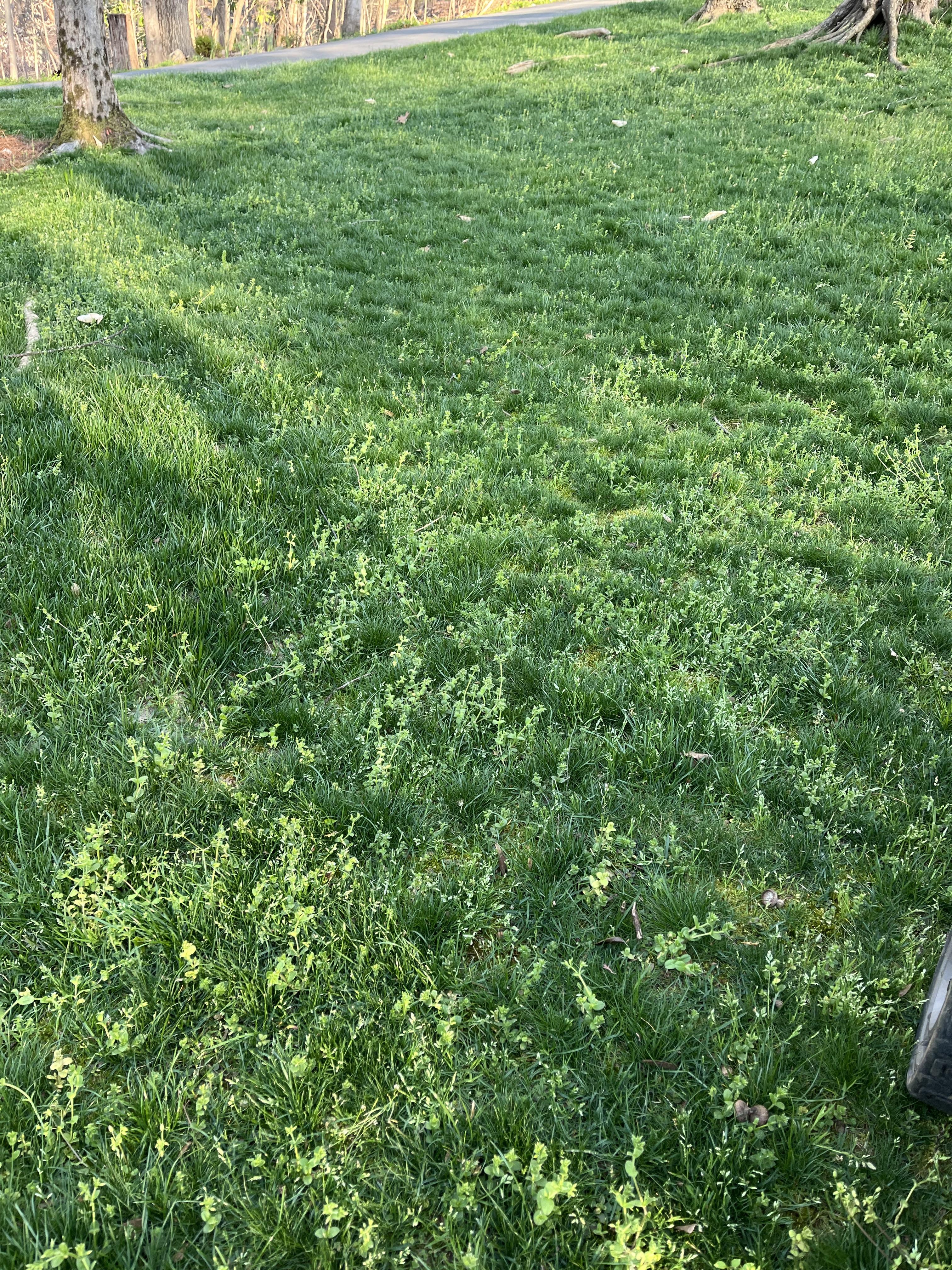
The lawn looked fine in October. Then March arrives and you notice patches of low, bright green mat spreading through the thin spots, dotted with tiny white or purple flowers - weeks before the grass has even started to green up. Pull a handful and it comes away easily, roots barely holding. That is the usual story with chickweed, and with the other winter annual weeds that share its calendar. They did not appear overnight. They germinated back in the fall and spent the winter quietly getting established, and now they are ready to flower and seed. Here is how to tell them apart, why your lawn grew them, and when acting actually makes a difference.
Most weeds people fight run on a summer clock. Winter annuals run on the opposite one. The seed sits in the soil through the heat of summer, germinates when the soil cools in September and October, and grows slowly through the cold months. In spring, as days warm, the plant flowers, drops a heavy load of seed, and dies back by early summer. Then the cycle repeats.
That clock matters for two reasons. First, the weeds you see in spring are the result of what germinated the autumn before, which means spring is a late moment to start. Second, because the seed is already in your soil, one season of ignoring them guarantees a thicker crop the next time around.
Common chickweed. This is the one that carries most of the problem. It forms a low, dense mat of soft, oval leaves that loves cool, damp, shaded ground, and it keeps growing in weather that stalls the grass. Look closely at the flowers: five white petals, each so deeply notched that the flower looks like it has ten. Stems are slender and juicy, and each has a single line of fine hairs down one side.
Henbit and purple deadnettle. These two are close cousins and get mixed up constantly. Both have square stems - roll one between your fingers and you can feel the corners - and rounded, scalloped leaves. Henbit has upper leaves that wrap the stem and pink-purple flowers. Purple deadnettle has triangular, purple-tinted leaves near the top. In a lawn, they show up as patches of upright purple in early spring.
Hairy bittercress. A flat rosette of small, rounded leaflets that lies against the soil through winter, then sends up thin stalks topped with tiny white flowers. The seed pods that follow are the giveaway: touch one when it is ripe and it snaps open and flings seed several feet, which is how a single plant seeds a whole bed.
Speedwell. A creeping, mat-forming weed with tiny scalloped leaves and small blue flowers with a pale center. It spreads by stems that root as they go, and it tolerates close mowing, so it can quietly take over a thin lawn without ever looking tall.
How to spot it: Get down and look at the stems and flowers rather than the leaves. Chickweed has a single line of hairs on a round stem and white flowers with notched petals. Henbit and deadnettle have square stems. Bittercress is a rosette with pods that pop. Speedwell is a creeping mat with small blue flowers. Also check the calendar - if it turned up and flowered while the grass was still dormant, it is almost certainly a winter annual.
Winter annuals need bare or thin ground to get started. A thick lawn shades the soil and leaves little room for seedlings, so the weeds concentrate wherever the turf has weakened: areas thinned by summer heat or grubs, spots beaten down by foot traffic, shaded corners where grass struggles, and compacted soil along walks and driveways. Cool, damp, shady conditions favor chickweed in particular, which is why it shows up under trees and on the north side of the house first.
This is the same pattern we see with other lawn weeds: the weed is a symptom of thin turf more than a cause. If you have thin spots from the summer, our guide to bare and brown spots covers the common causes worth ruling out.
Timing decides almost everything here, and it is worth being clear about what a treatment can and cannot do.
The best window is the fall. In Connecticut that runs from mid-September through early November, while the weeds are small, young and actively growing. Young plants take up a selective broadleaf treatment readily, and you catch them before they establish a root system for winter. This is the same fall window that makes fall broadleaf weed control so effective on dandelion, clover and ground ivy, and one fall visit can address both sets of weeds together.
If you miss the fall, spring is still worth using, but with lower expectations. A mild spring day lets a treatment work on plants that are still growing, but by the time chickweed and bittercress are flowering, much of the seed is already made. Spraying a plant that has already dropped its seed removes the plant, not next year's crop. And once summer heat arrives, winter annuals die on their own, so there is no point treating them in July.
One more thing to keep in mind if you plan to overseed: some weed control products work against grass seed as well as weed seed. That is why we sequence weed control and seeding rather than doing both at once, and why newly seeded grass should wait several mowings before any herbicide. The details are in our overseeding aftercare guide.
Treatment clears what is there. Density keeps it from coming back. A lawn with healthy, closely spaced grass leaves little bare soil for winter annual seed to germinate in, and that is the main reason the lawns we look after see fewer of them each year. Core aeration and overseeding in late summer closes the thin areas, and a well-timed fall feeding helps the existing turf thicken before winter. We explain why those steps work best together in our guide to overseeding a lawn step by step.
We will also tell you plainly when a lawn is too far gone for weed control alone. If an area is more chickweed than grass, spraying will leave bare soil, and the right answer is to treat, then rebuild the turf in the next seeding window.
Winter annual weeds are part of the weed control and fertilization program we run on Connecticut lawns, not a separate add-on. We time the fall visit to catch young plants, follow up in spring on mild days when needed, and pair both with the feeding and fall aeration and overseeding that thicken the lawn so these weeds have less room to start. Pro Turf Lawn Care serves homeowners across Fairfield, Litchfield, and New Haven counties, and we will match the timing to your lawn rather than a fixed date on the calendar. If you would like to see how it fits your property, you can read about our weed control program or request your online quote here.
Our licensed team will identify it and build the right plan for your property across Fairfield, Litchfield & New Haven counties.
See our weed control programRequest your quote →