Lawn Health
Overseeding Aftercare: How to Care for New Grass Seed
The weeks after overseeding decide the results. Here's the watering, mowing, and care routine that turns fresh seed into a thick Connecticut lawn.
The weeks after overseeding decide the results. Here's the watering, mowing, and care routine that turns fresh seed into a thick Connecticut lawn.
Overseeding is only half the job. What you do in the two to four weeks after the seed goes down decides whether you get a thick new lawn or a bag of wasted seed. New grass seed is fragile in its first weeks — it lives or dies on moisture and gentle handling. The good news is the routine is simple, as long as you follow it consistently. Here is how to care for newly overseeded grass in Connecticut.
If you remember one thing, remember this: newly seeded areas must stay consistently moist until the seed germinates. A seed that starts to sprout and then dries out is a dead seed — there is no second chance for it. That makes watering the single most important task in the whole process.
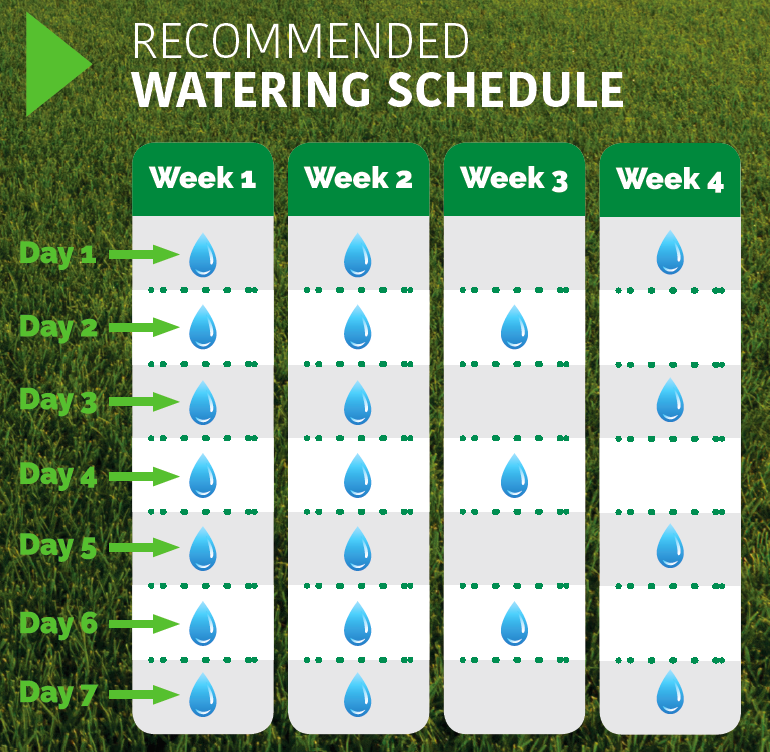
The pattern changes as the grass grows. Right after seeding through germination, water lightly and frequently — typically once or twice a day, just enough to keep the top inch of soil damp without creating puddles or runoff that floats seed away. Once seedlings appear (ryegrass in about 5–10 days, fescues and bluegrass longer), begin watering a little more deeply and slightly less often, encouraging roots to chase moisture downward. As the lawn establishes, transition to the deep, infrequent watering a mature lawn wants.
The watering rule for new seed: keep the surface consistently moist — light and frequent — until germination, then gradually shift to deeper, less frequent watering as the grass roots in. Never let sprouted seed dry out, and never wash it away with heavy watering.
Let the new grass reach mowing height before the first cut — generally around three to three and a half inches for Connecticut lawns. When you do mow, make sure the mower blade is sharp: a dull blade tears young plants out of the soft, moist ground instead of cutting them cleanly. Keep foot traffic off the area as much as possible for the first few weeks, since new seedlings are easily damaged.
A starter fertilizer applied at seeding gives new grass the phosphorus and nutrients it needs to build roots. After that, new grass benefits from a follow-up feeding a few weeks in as it establishes. This is part of why fall overseeding fits so well into a full fall program — the feeding schedule supports the new grass right through establishment and into winter hardening.
You will likely see some weeds pop up in newly seeded areas, and it is tempting to reach for a weed killer. Do not. Most weed control products will kill or stunt young grass, and new grass generally needs to be mowed a few times before it can tolerate herbicide. The dense new turf itself will crowd out many weeds as it fills in. Weed control comes later, once the grass is established — a sequence we time carefully in our programs.
Within a couple of weeks you should see a green haze of new seedlings, thickening into real turf over the following month. The lawn will not reach full maturity until the next growing season, but a fall-seeded lawn that is watered and cared for properly comes out of winter noticeably thicker and heads into spring strong. The effort you put in during these few weeks pays off for years.
The care routine is straightforward, but it is unforgiving of missed watering in those first weeks. If you would rather have the seeding, feeding, and follow-up handled on the right schedule, Pro Turf Lawn Care manages fall overseeding and establishment across Fairfield, Litchfield, and New Haven counties. Request your online quote here.
Our licensed team will identify it and build the right plan for your property across Fairfield, Litchfield & New Haven counties.
See our aeration & overseeding serviceRequest your quote →