Lawn Health
Overseeding a Lawn: How to Do It, Step by Step
Overseeding thickens a thin lawn, but only if the seed reaches soil. Here is how to overseed a lawn step by step, and the timing that makes it work.
Overseeding thickens a thin lawn, but only if the seed reaches soil. Here is how to overseed a lawn step by step, and the timing that makes it work.
A thin lawn does not usually die all at once. It gives up a little each summer, and by the third or fourth year you can stand on the porch and see soil between the grass plants. Feeding it more does not fix that. Grass plants have a natural lifespan, and once a lawn thins past a certain point, the only way back is to put new plants in the ground.
That is overseeding: spreading fresh seed into an existing lawn rather than tearing it out and starting over. Done properly it is the highest-value thing you can do for a Connecticut lawn. Done casually, it is money spread on the ground.
Overseeding introduces younger, denser, more disease-resistant grass into turf that has aged out. Newer cultivars are meaningfully better than what was planted here twenty years ago, so an overseeded lawn is not just thicker, it is genuinely tougher. A dense stand also crowds out weeds on its own, which is the cheapest weed control there is.
How to spot it: stand upright and look straight down. If you can see soil between the grass plants, the lawn is thin enough to benefit. Then push a screwdriver into the ground. If it stops in the first two inches, compaction is part of the problem and the lawn needs aerating before it needs seed.
Mid-August through mid-September. Soil is still warm enough for fast germination, the air is cooling into the range cool-season grasses prefer, and summer annual weeds are finishing their cycle instead of competing with your seedlings. Spring seeding works far less well here because the new grass meets July heat before it has a root system. We go through the full calendar in our guide to when to aerate and overseed a Connecticut lawn.
1. Mow low and bag the clippings. Drop to about two inches for this one cut and collect what comes off. You are trying to get sunlight and seed down to soil level, and a tall canopy blocks both.
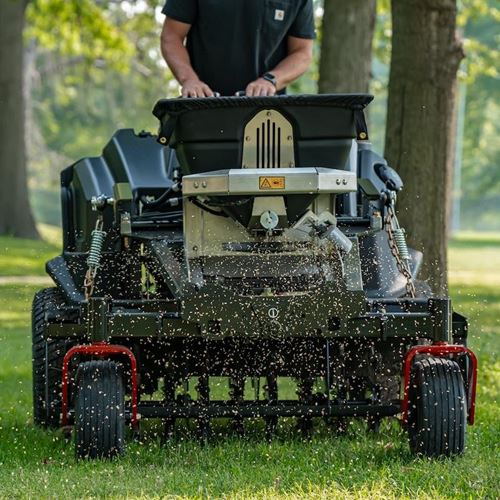
2. Core aerate first. This is the step people skip, and it is the reason most overseeding fails. Seed only germinates where it touches soil. Broadcast it over an established lawn and most of it lands on thatch and existing blades, dries out within a day, and never grows. Core aeration pulls plugs out and opens thousands of holes that hold moisture, shelter the seed, and give new roots somewhere to go. Our core aeration guide covers how it works. Aeration and seeding should happen the same day, aeration first.
3. Match the seed to the property. Sun and shade need different grasses, and the bargain contractor mixes sold at big box stores are where a lot of overseeding money goes to die. Our guide to the best grass seed for Connecticut lawns covers the choice in detail.
4. Spread at the right rate. Overseeding takes roughly half the rate of seeding bare ground, generally three to five pounds per thousand square feet for a bluegrass and ryegrass blend. Heavier is not better. Crowded seedlings compete with each other and thin themselves out.
5. Put down a starter fertilizer. New seedlings need phosphorus for root development, which established lawn feed does not carry much of. This is not the moment for a heavy nitrogen application.
6. Keep the surface damp. This is where results are won or lost. The top half inch has to stay moist until germination, which usually means short, light watering two or three times a day rather than one long soak. Perennial ryegrass shows in five to ten days, bluegrass can take up to three weeks, so keep going until the slow ones arrive.
Germination inside two weeks, visible thickening by week four, and a noticeably denser lawn by the following spring. The full benefit shows up in the second season, when the new plants have a mature root system and hold through summer heat. Overseeding is not a one-time repair either. Lawns here do best when it becomes an annual habit, because you are continually replacing plants that are aging out. What happens in the weeks right after seeding matters as much as the seeding itself, and we cover that in overseeding aftercare.
We core aerate and overseed as a single visit in the late-August to mid-September window, with seed matched to the sun and shade on your specific property and a starter feeding to carry the seedlings. We will also tell you honestly when a lawn is too far gone for overseeding to be the answer, because on a lawn that is more weeds than grass, renovation is the better spend.
Broadleaf weed control is part of every program we run, timed around the seeding so it works with the new grass instead of against it. If your lawn has been getting thinner every year, this is the season that turns it around. Request a quote and we will come out and take a look.
Our licensed team will identify it and build the right plan for your property across Fairfield, Litchfield & New Haven counties.
See our aeration & overseeding serviceRequest your quote →