New lawns · Renovation · Grading

New Lawn Installation, Renovation & Grading in Connecticut

Bare ground, a lawn that's past saving, or a brand-new build — we grade it, prep the soil, and seed it into turf that actually establishes.

Get a Quote

Tell us about your property and we'll put together a contract quote.

Got it — we'll call or text you within one business day. We'll measure your lawn and begin preparing a quote.
That didn't go through. Give it another try — or call (203) 776-8873 and we'll take it from there.

Or call (203) 776-8873

★★★★★52 Google reviews Licensed & insured Owner-operated in Sandy Hook Serving Fairfield, New Haven & Litchfield counties
Sound familiar?

You've been feeding a lawn that isn't coming back

Another season of treatments, another spring where it looks the same. Thin patches that never fill. Ground so hard the mower bounces. Weeds that come back faster than the grass does.

At some point the problem isn't the program — it's what's underneath. No amount of feeding fixes compacted soil, a bad grade, or a stand of grass that was never right to begin with.

Bare patches that reseed over and never take

Water pooling, or running straight off

Coarse clumping grass nothing will kill selectively

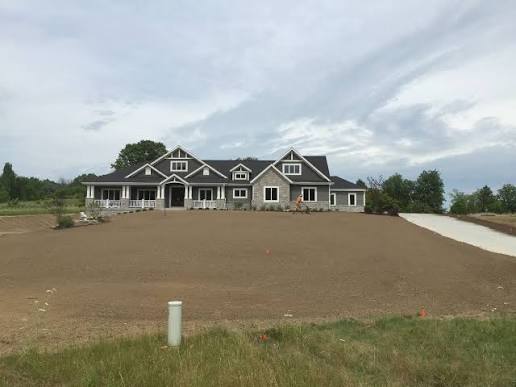
A new build handed over as dirt and construction ruts

If that's your lawn, starting over costs less than three more seasons of treating it.

Option 1 · Lawn Renovation

Lawn renovation — replacing turf that's past saving

We take the failed lawn down, fix what caused it, and seed it new. You keep the grade, the irrigation and the established edges — we're replacing the turf, not rebuilding the yard. It's the faster and cheaper of the two routes, and for most properties it's a fall job.

Take the old stand down

Weeds, coarse clumping fescue and whatever else is in there — removed, not sprayed and hoped over.

Fix what caused it

Compaction, drainage, a low spot that never dries — corrected before a single seed goes down.

Condition and reseed

Soil conditioned to a clean seedbed, then hydroseeded with a blend built for your light and traffic.

Over three years it costs less than continuing to treat a lawn that was never going to come back.

Option 2 · New Lawn Install

New lawn installation — starting from nothing

Nothing to remove and nothing to work with. A finished house usually comes with an unfinished yard — compacted subsoil, construction debris, a rough grade, and whatever topsoil survived the build. Same for a lot that's been cleared, an addition that left bare ground, or a pool project that took the lawn with it.

This is the full sequence — grade, then soil, then seed — and it's the version where getting the order right matters most. We work directly with homeowners and alongside builders and site contractors. If your closing date is set, tell us: the seeding window matters more than the move-in date, and doing it in the wrong season means doing it twice.

Lawn grading and drainage

Grass can't fix a grade problem. If water runs toward your foundation, sits in a low spot for two days after a storm, or sheets off a slope fast enough to take the topsoil with it, seeding over the top of that just buys you a season.

Water toward the house

The grade runs the wrong way and every storm sends it at the foundation.

Standing low spots

Water sits for two days after a storm and the grass in that spot never lasts.

Slope washout

Runoff moves fast enough to carry the topsoil, and the seed, off with it.

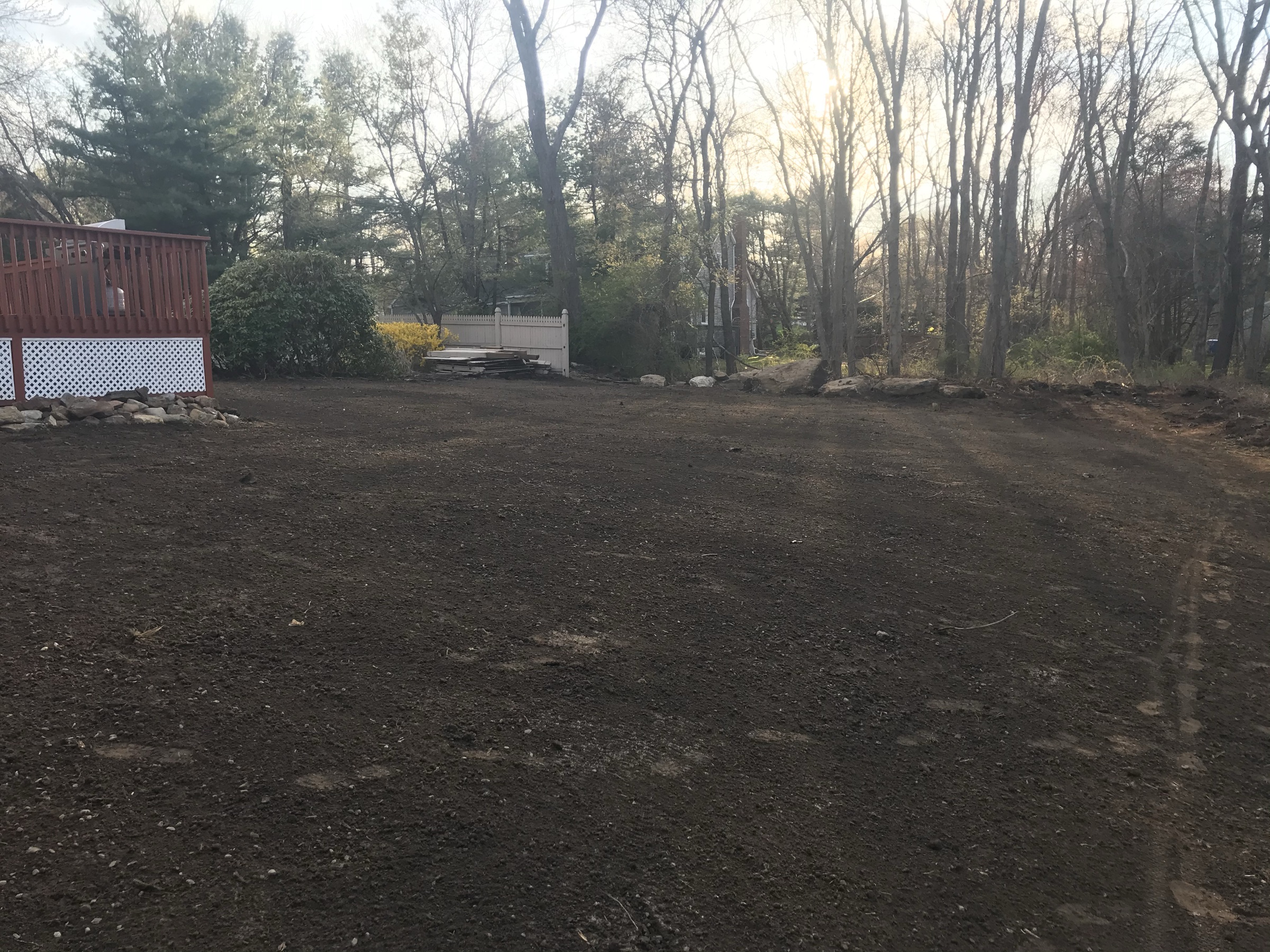
We regrade the lawn to move water where it should go — away from the house, off the turf, and into the places it can actually drain. On a new build that usually means turning a rough construction grade into a finish grade you can mow. On an established property it's more often correcting settling, low spots, or a slope that was never right to begin with.

Grading is part of most installs and renovations we do. Sometimes it's the whole job.

Grading is part of most installs and renovations we do — and on properties where drainage is the whole problem, it can be the job on its own.

Soil and seed

Good soil first, then good seed

A new lawn is only as good as what's underneath it. Connecticut soils run from sandy on the coast to dense clay and rocky loam inland, and on a new build the topsoil is often long gone — you're seeding into whatever the excavator left behind.

Soil

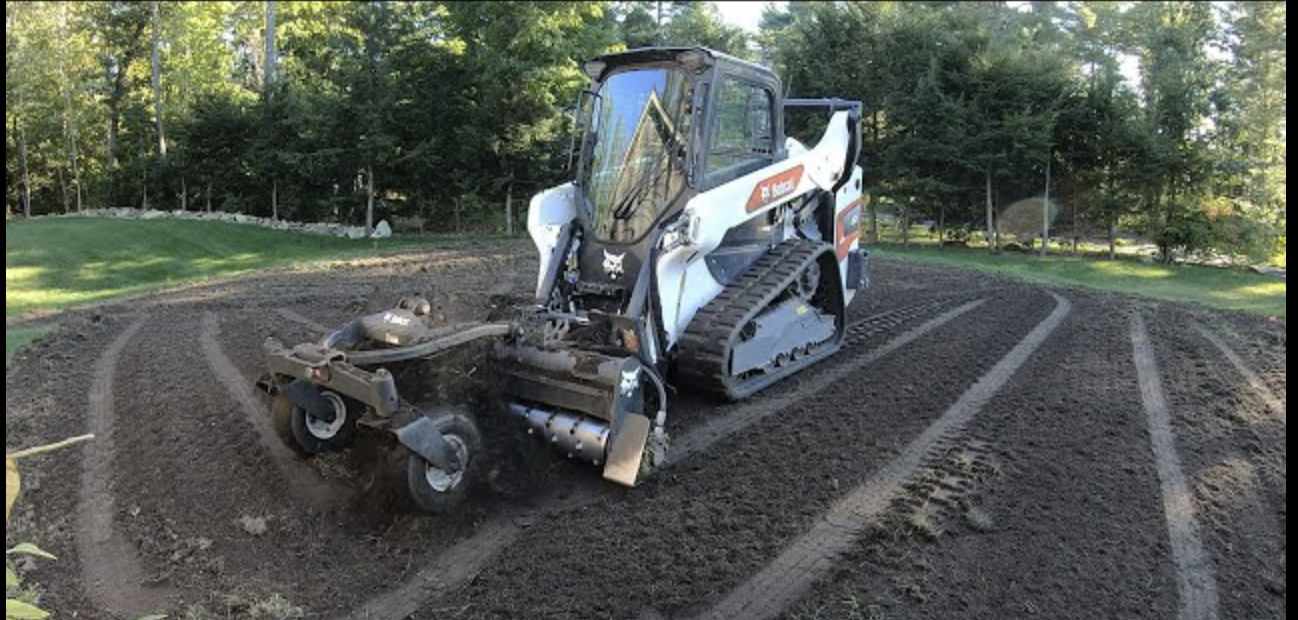
Before anything gets seeded we condition the soil with a conditioner on a skid steer or tractor — loosening compacted ground and pulling out rock and debris. That's the difference between seed germinating into workable soil and seed sitting on hardpan waiting to wash off.

Seed

Premium turf-type tall fescue and Kentucky bluegrass blends — A-List, blue-tag varieties bred for this climate. The same seed we use for fall overseeding, because it's what holds up through a Connecticut summer.

Timing

Fall is the best window: warm soil, cool air, and reliable moisture give new seed the longest runway before it has to survive a summer. Spring works, but a spring lawn faces heat and crabgrass pressure before it's fully rooted. We'll tell you honestly if waiting until August is the better call for your property.

Every lawn we install starts with what's under it. Let's see what yours has.

How we seed

Hydroseeding, and when we use it

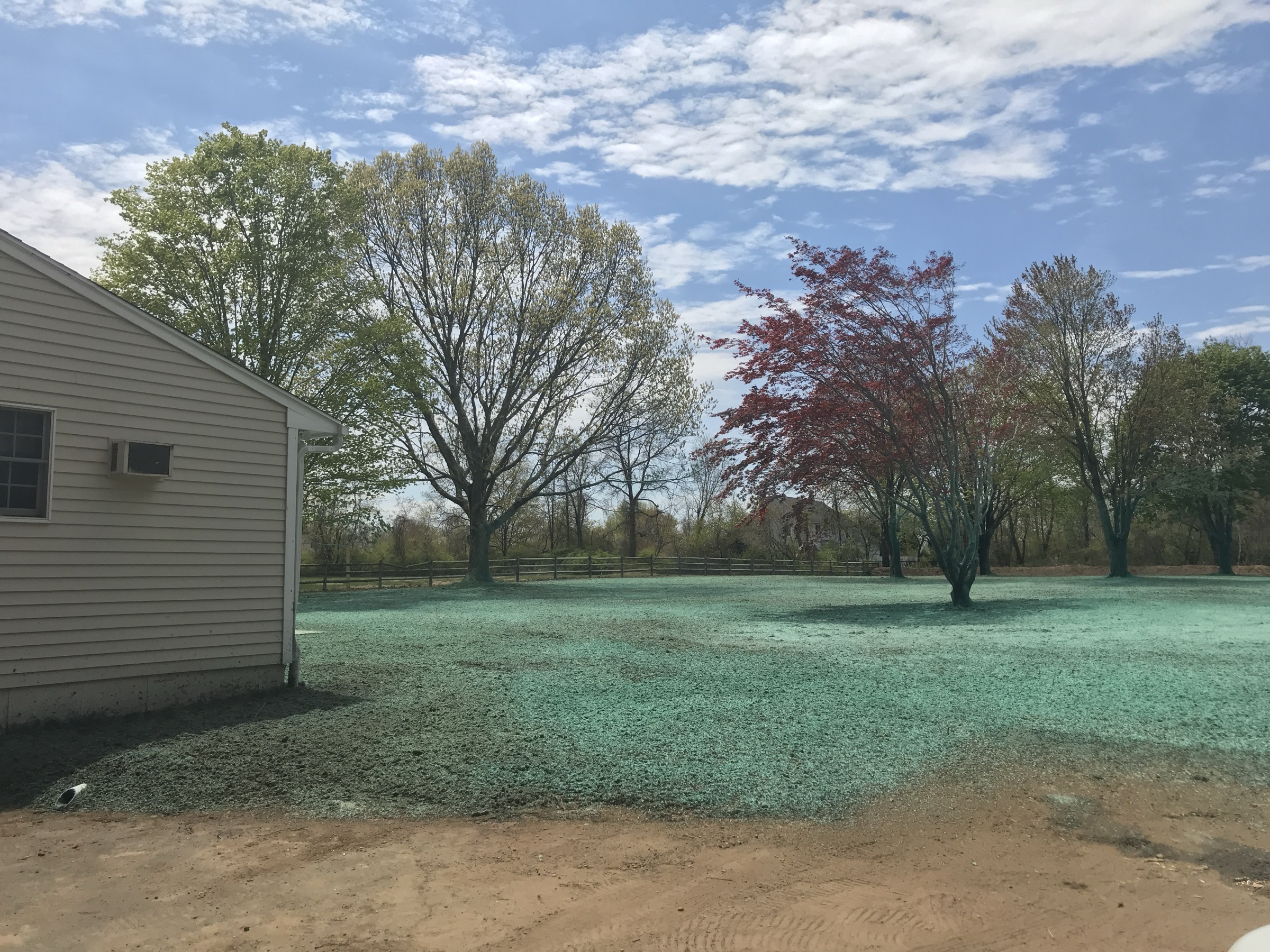
We hydroseed. Seed, mulch, fertilizer and tackifier go down as a single slurry that holds moisture against the soil and keeps seed where we put it — including on slopes where dry seed would wash off in the first rain. It covers large areas evenly and establishes faster than broadcasting into a raked bed.

It's the difference between seed that germinates and seed that dries out or washes downhill. On a new install or a full renovation there's no better way to get even, dense coverage across a whole property in one pass.

See how hydroseeding works →

The process

From bare ground to an established lawn

Every property starts somewhere different. A new build has subsoil and construction ruts. A twenty-year-old lawn that's gone to weeds and compaction has good bones under a bad surface. The steps below are the full sequence — we'll tell you honestly which ones your property actually needs, and which you can skip.

01

Walk the property

We look at grade, drainage, soil, sun, and what's actually failing before quoting anything. Most bad lawns have a cause, and if the cause isn't fixed the new grass fails the same way the old one did.

02

Grade and drainage

Correcting slope and low spots so water moves away from the house and off the lawn instead of pooling on it. Lawn grading and drainage

03

Soil conditioning and seedbed prep

We run a soil conditioner on a skid steer or tractor across the whole area. It breaks up compacted ground, screens out the rock and debris that come up during grading, and leaves a loose, even surface — a seedbed that seed can actually root into rather than sit on top of.

04

Seed

Hydroseeding for most jobs — seed, mulch, tackifier and fertilizer sprayed as one slurry so the seedbed holds moisture and the seed makes real soil contact. How hydroseeding works

05

Establishment

The first three weeks decide the outcome. We tell you exactly how to water, when to mow the first time, and what a healthy stand looks like at day 10 versus day 30.

06

Aftercare

A new lawn's first year decides what it becomes. Most install clients move onto our lawn care program — feeding, weed control, and the fall aeration that keeps it thickening. Lawn care programs

Six steps, one crew, start to finish. Let's look at your property.

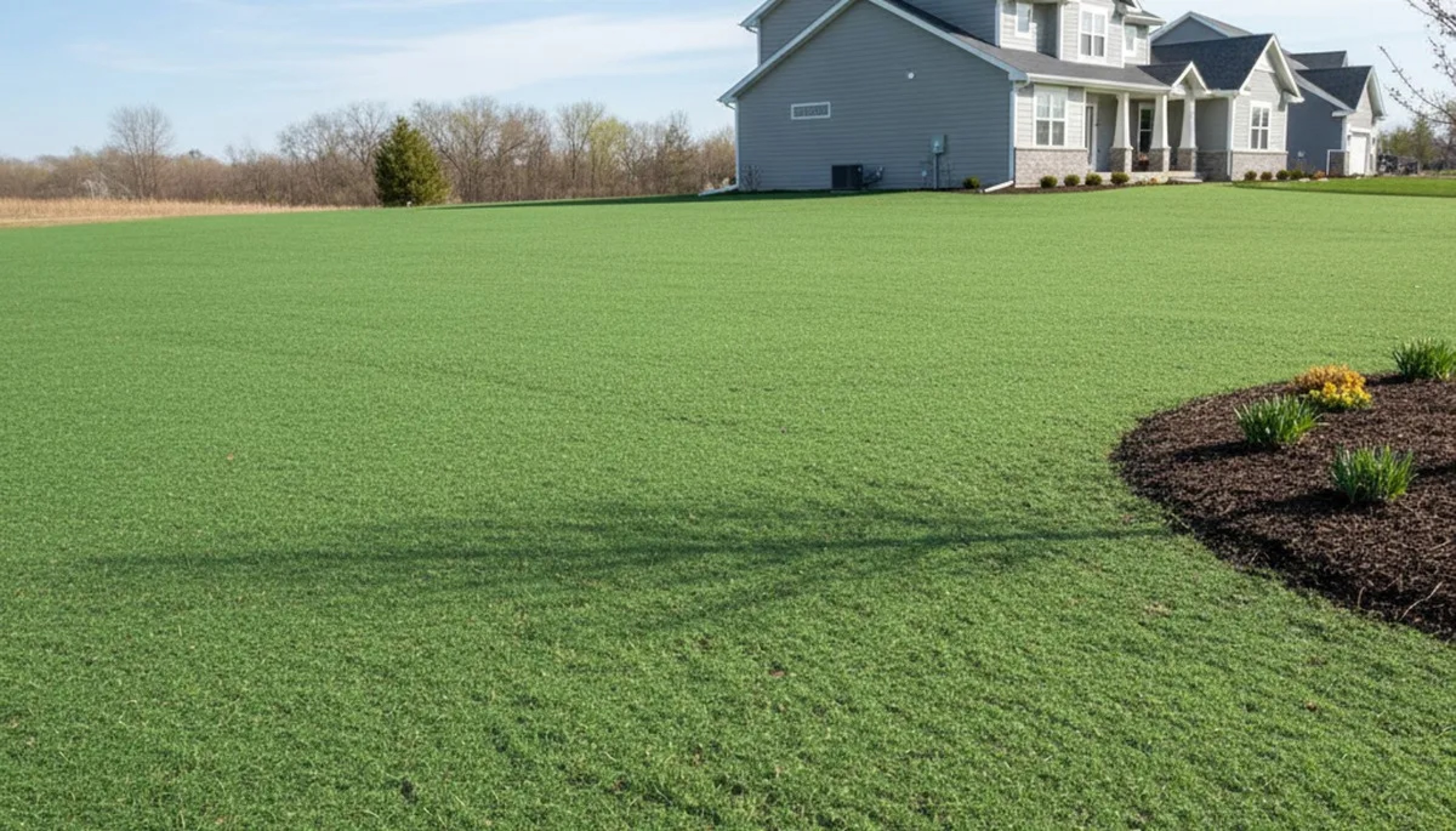
Bare ground in September. A lawn by the following June.

Before you hire us

What we'll tell you before you hire us

We don't offer everything

No dethatching, no liquid aeration, no slice seeding. Each of those gets sold a lot around here and none of them does what core aeration and proper seeding do. We'd rather send you elsewhere than take money for a service we don't believe in.

We won't guarantee seed we don't water

Establishment is mostly water, and after we leave, watering is yours. We'll give you an exact schedule and check in through the establishment window — but we're not going to sell you a guarantee that depends on something we don't control. Anyone who does is selling you the guarantee, not the lawn.

We'll tell you what it actually needs

Some properties need the grade corrected before anything else. Some need soil more than they need seed. We walk it first and price the parts separately, so you can see exactly what you're paying for and why.

One local crew, all year

The crew that installs your lawn is the crew that feeds it, treats it, and keeps it. We're based in Sandy Hook and we service the towns around us every day.

Service area

Where we install lawns

We install, renovate, and grade lawns across Fairfield, New Haven, and Litchfield counties.

Newtown · Sandy Hook · Monroe · Trumbull · Brookfield · Bethel · Danbury · Redding · Ridgefield · Easton · Weston · Wilton · New Fairfield · Shelton · Southbury · Oxford · Seymour · Middlebury · Beacon Falls · Woodbridge · Bethany · Prospect · Naugatuck · Orange · Woodbury · Roxbury · Bridgewater · New Milford · Washington · Bethlehem · Morris · Litchfield · Watertown · and surrounding towns

Common questions

New lawn installation — common questions

What does a new lawn cost?

It depends on square footage, how much grading the property needs, and how much soil work is involved — those three things move the number far more than the seeding itself. We walk the property, measure it, and give you a written quote with the grading, soil, and seeding priced separately so you can see what you're paying for.

When is the best time to install a new lawn in Connecticut?

Fall, for most properties. Warm soil and cool air let new seed root before it faces a summer. Spring installs work but face heat and crabgrass pressure before the lawn is fully established. If your timeline is flexible, we'll usually tell you to wait for August or September.

How long until I can walk on it? Mow it?

Germination in roughly 14–21 days in fall conditions. Light foot traffic after the first mow, usually around week five. A new lawn takes a full season to thicken and about a year to be genuinely durable.

Do I have to water it myself?

Yes, and it's the single thing that decides whether the lawn takes. We give you a specific schedule — frequency, duration, and how it changes week to week. If you have irrigation we'll set it with you. If you don't, we'll tell you honestly what it takes by hose before you commit.

Should I choose seed or sod?

Seed, for most Connecticut properties. A seeded lawn roots into your own soil rather than sitting on it, you get a blend chosen for your light and traffic instead of whatever the farm grew, and it costs meaningfully less. Sod is the right call when you need the lawn usable the day it goes down — a small area, a dog run, or a steep slope that won't hold seed. When sod is genuinely the answer we install it through a local partner we've worked with and stand behind, and we handle the grade, the soil prep and the lawn care afterward.

Can you fix drainage while you're at it?

Grading is part of most installs. If water pools, runs toward the house, or washes down a slope, correcting that comes before seed — otherwise the new lawn fails the same way the old one did.

Do you maintain the lawn after you install it?

Yes, and we'd recommend it. A new lawn's first year sets what it becomes. Most install clients move onto our lawn care program — feeding, weed control, and the fall aeration that keeps it thickening.

Lawn careFertilizationIrrigation
Question we didn't answer? Ask us directly.

Starting over on your lawn?

Tell us about the property — new build, failed lawn, or somewhere in between — and we'll walk it, tell you what it actually needs, and quote it.

Get a QuoteCall