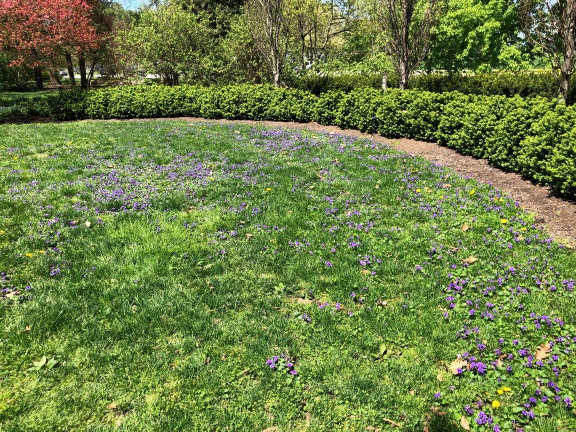
If you only spray your lawn for weeds once a year, do it in the fall. Fall weed control on a Connecticut lawn is the most effective - and most overlooked - move a homeowner can make, and it is the reason our clients across Newtown, Monroe, Trumbull, Southbury, and Woodbury head into spring with far fewer dandelions and violets than their neighbors. This guide covers the broadleaf weeds we target in autumn, how to tell them apart, and why September through early November is the window that matters most.
Why fall is the best window for broadleaf weeds
Broadleaf weeds are the wide-leaved invaders - dandelion, clover, ground ivy, violet, plantain - as opposed to the grassy weeds like crabgrass. In fall, perennial broadleaf weeds stop putting energy into leaves and start pulling sugars down into their roots to survive winter. A selective herbicide applied now gets carried down with those sugars, straight to the root, and kills the whole plant instead of just burning off the top. Do the same treatment in spring and the plant is pushing energy upward and outward - you knock back the leaves, but the root lives and the weed returns. That single difference in plant biology is why fall applications succeed where spring ones frustrate.
It helps that these are broadleaf weeds, not grasses. A selective broadleaf product targets the wide-leaved plants while leaving your grass unharmed. Grassy weeds like crabgrass and its lookalikes are a different problem on a different clock - handled with pre-emergent in spring, not broadleaf control in fall.
Dandelion
The weed everyone knows on sight in bloom - but in fall it is often just a flat rosette with no flower, which is exactly when it is most vulnerable. Each plant sinks a thick, fleshy taproot that snaps when you try to pull it, and any fragment left behind regrows. That taproot is also what makes fall the ideal time to treat: the herbicide follows the plant's own sugars all the way down.
How to spot it: A flat rosette of jagged, deeply toothed leaves radiating from a central point; a single thick taproot; the familiar yellow flower in spring and fall, followed by the white puffball seed head.
White clover
Clover shows up in lawns that are low on nitrogen - it makes its own, which is why it stays green and lush while the grass around it thins. Some homeowners tolerate it, but left alone it spreads into broad mats and draws bees right where children play. It is a perennial, so the same fall root-kill logic applies.
How to spot it: Three rounded leaflets, each with a pale crescent-shaped watermark; low creeping stems that root as they spread; small white-to-pinkish puffball flowers through the warm months.
Ground ivy (creeping charlie)
One of the toughest broadleaf weeds in Connecticut, ground ivy thrives in the damp, shaded, moist ground where grass struggles - along tree lines and the north side of the house. It spreads by creeping stems that root at every node, so a single plant can blanket a wide area. Because it is so persistent, fall is often the only window where a treatment truly sets it back.
How to spot it: Scalloped, rounded leaves on a square stem; a low mat that creeps and roots as it goes; small funnel-shaped bluish-purple flowers in spring; a sharp minty smell when the foliage is crushed or mowed.
Wild violet
Pretty in flower and miserable to control, wild violet is arguably the most stubborn broadleaf weed we deal with. Its waxy leaves shrug off many herbicides, and it grows from thick underground rhizomes that let it return year after year. It favors the same moist, shaded spots as ground ivy. This is the weed that most rewards fall timing and repeat treatment.
How to spot it: Heart-shaped, waxy leaves that bead water; purple, white, or bicolor flowers in spring; dense low clumps in shade and moist ground that spread by underground rhizomes.
Broadleaf plantain
A common sight in compacted, high-traffic Connecticut lawns, plantain forms a low rosette that tolerates being walked on and mowed. It is a perennial with a short, tough root system and it seeds prolifically from tall, narrow spikes.
How to spot it: A ground-hugging rosette of broad, oval leaves with prominent parallel veins that run the length of the leaf; leafless seed stalks standing straight up from the center like slender rat-tails.
Yellow woodsorrel (oxalis)
Often mistaken for clover, oxalis is a warm-season broadleaf that lingers into fall and seeds aggressively. Its seed pods build up pressure and fling seed several feet, so a small patch becomes a scattered one fast - another reason to shut it down before winter.
How to spot it: Three heart-shaped leaflets (not the rounded leaflets of clover); small five-petaled yellow flowers; upright, okra-shaped seed pods that pop when touched.
When Pro Turf treats broadleaf weeds
In Connecticut, the prime broadleaf window runs from about mid-September through early November, while the weeds are actively moving sugars to their roots and before a hard frost shuts them down. Pro Turf applies selective post-emergent broadleaf control during this stretch, with a follow-up pass on tough customers like violet and ground ivy as needed. Pairing that treatment with fall fertilization does double duty - the weeds go down while the grass thickens to crowd out next year's seedlings.
Tired of the same dandelions and violets coming back every spring? Fall is when we break that cycle. Request a quote and we will build a fall weed-control and feeding plan matched to your lawn across Fairfield, Litchfield, and New Haven counties.