Lawn Health
Bare & Brown Spots in Connecticut Lawns: 8 Common Causes
Bare and brown spots in a Connecticut lawn have eight likely causes — from grubs and disease to drought and pet damage. Here's how to tell them apart.
Bare and brown spots in a Connecticut lawn have eight likely causes — from grubs and disease to drought and pet damage. Here's how to tell them apart.
Spongy sod that peels back like carpet = grubs; crispy but rooted-down turf = drought.
Spots in the hottest, sunniest, driest strips near pavement point to chinch bugs.
Circular or blotchy tan patches that appear overnight in humid weather = fungal disease.
A dead center ringed by extra-dark-green grass = dog urine.
Sharp, straight-edged dead zones = a spill (fertilizer, fuel, or product), not a pest.
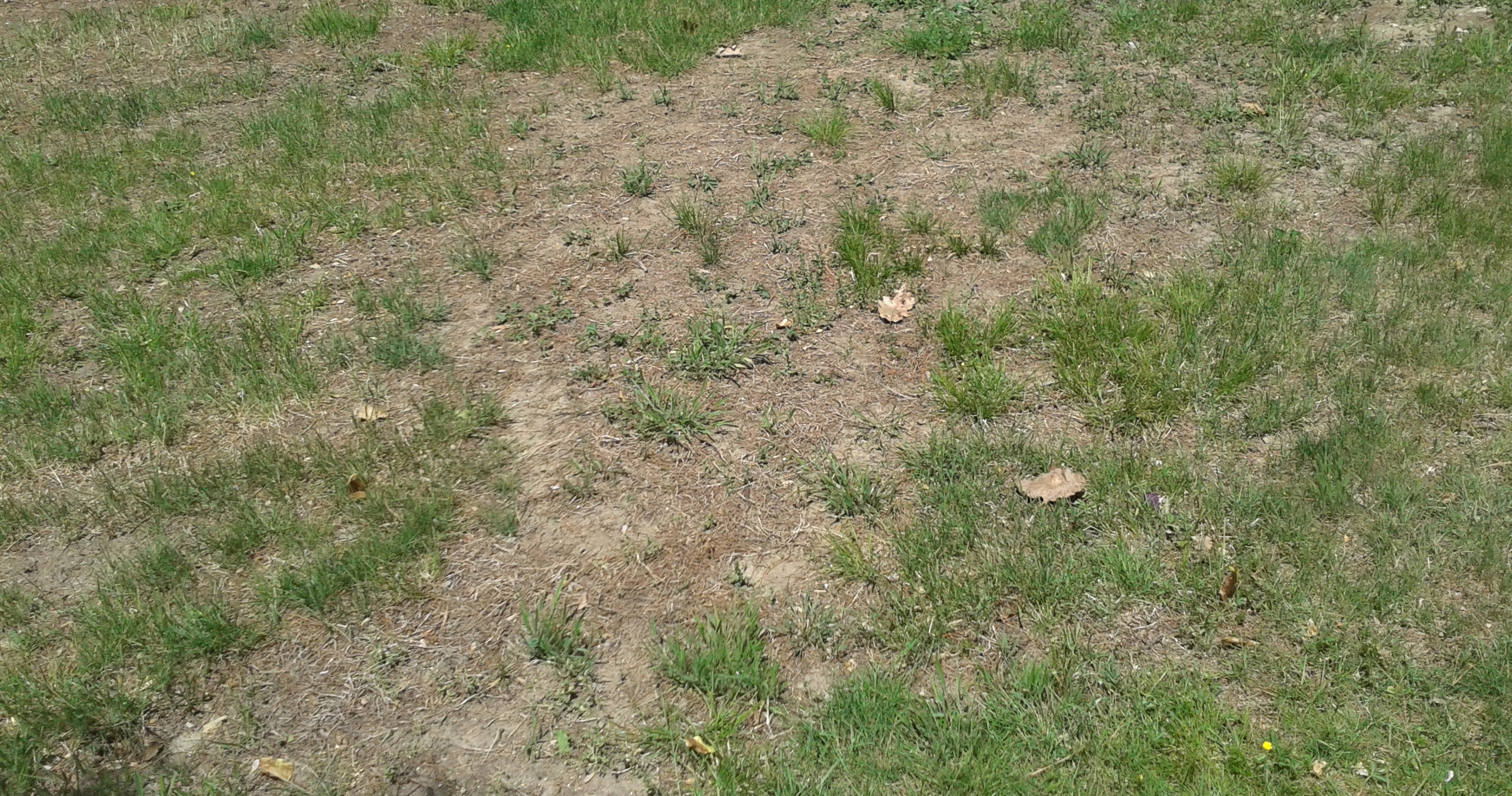
Few things nag at a homeowner like a patch of lawn that will not stay green. The frustrating part is that brown spots in a lawn are not one problem with one fix — they are a symptom with at least eight common causes, and here in Connecticut we see all of them across Fairfield, Litchfield, and New Haven counties. A grub patch, a drought patch, and a disease patch can look nearly identical from the deck, but each one calls for a completely different response. This guide walks through the eight culprits we diagnose most often on Newtown, Monroe, Trumbull, Southbury, and Woodbury lawns — and how to tell which one you are actually looking at.
Before you treat anything, tug on the grass. Connecticut's cool-season lawns naturally go dormant and tan in a hot, dry summer stretch, then green back up when rain returns. Dormant turf is still firmly rooted and the crowns at the base stay alive. If a patch pulls up easily or the blades crumble to dust, you are looking at real damage. And if a patch simply looks different — coarser, lighter, faster-growing — rather than dead, that is often coarse, clumping fescue, a look-alike we cover in our grass ID guide, not a brown spot at all.
The most common summer problem is no problem at all. When we go two or three weeks without meaningful rain in July, whole sections of unirrigated lawn fade to straw-tan, usually starting on south-facing slopes and thin, sandy areas. It is uniform, gradual, and rooted-down. A good soak or the next rainfall brings it back.
Sometimes one patch stays crispy while everything around it is green — even after you water. That is usually a localized dry spot: the soil has gone hydrophobic (water-repellent) and rain runs off instead of soaking in. These crop up over old fill, buried debris, or thin turf, and a wetting agent fixes what more watering cannot.
Grubs feed on roots just below the surface, so the turf loses its anchor. By late summer you get irregular brown patches that feel spongy underfoot and lift up like a loose carpet. Skunks, raccoons, and birds tearing at the lawn are a giveaway that they are feeding on the grubs underneath.
How to spot it: Grab a browning edge and pull. If the sod rolls back with few or no roots holding it down — and you find white, C-shaped larvae in the top inch or two of soil — it is grubs. More than about 8 to 10 per square foot warrants treatment. See our grub control guide.
Chinch bugs thrive in exactly the spots that bake: sunny, dry lawn edges along driveways, sidewalks, and south-facing foundations. They pierce the grass and inject a toxin, so damage shows up as yellowing that turns brown and spreads outward through the hottest weeks of the season — and unlike drought, it does not bounce back when you water.
How to spot it: Part the grass at the green edge of a spreading brown patch on a hot afternoon and watch the thatch line. Small black-and-white insects moving at the soil surface confirm chinch bugs. More detail in our chinch bug guide.
Connecticut's humid summer nights are perfect for fungal disease. Brown patch throws large, circular tan patches in the heat; dollar spot leaves small silver-dollar-sized spots that can merge; red thread shows pinkish-red threads in cooler, wet spells. These appear fast — often overnight — and usually in blotchy or ringed patterns rather than the sharp edges of a spill.
How to spot it: Look early in the morning while dew is still down. Fuzzy gray-white growth, fine pink-red threads, or tan lesions banded across individual blades point to disease. See our red thread guide for one of the most common CT cases.
The tell here is unmistakable once you know it: a dead or tan center ringed by a halo of extra-dark, extra-lush green. The concentrated nitrogen in urine burns the center while the diluted edges get a fertilizer boost. These are small, round, and scattered wherever the dog visits.
How to spot it: Small circular dead spots a few inches across with a bright green ring around them, clustered in a pet's favorite areas. Flushing the spot with water soon after helps; the turf usually needs reseeding to fully recover.
If a dead zone has sharp, straight, or geometric edges — a stripe, a boot print, a spill splash — it is almost never a living pest. Over-applied fertilizer, a gas or oil drip from the mower, or a spilled product will scorch turf in a pattern that follows how it was spilled, not how an organism spreads.
How to spot it: Unnaturally crisp edges and a shape that matches equipment or foot traffic. Living causes always have soft, irregular margins. Heavy spills may need the soil flushed before anything will regrow.
Mowing too short scalps the high spots and ridges, leaving tan crescents that show up right after you cut. A dull blade shreds instead of slicing, and the frayed tips brown out across the whole lawn, giving it a hazy, off-color cast within a day or two. Both are easy to fix: raise the deck to three or three-and-a-half inches for CT lawns in summer, and keep the blade sharp.
If you have ruled out the obvious — the lawn is watered, mowed high, and the spots still will not quit or keep spreading — it is worth having someone put hands on the turf. Grubs, chinch bugs, and disease all move fast in a Connecticut August, and the right treatment depends entirely on which one it is. Our program clients get this diagnosis built in, so problems get caught before a small patch becomes a re-seeding project.
Not sure what is behind the brown spots in your lawn? Request a quote and we will take a look at what is really going on.
Our licensed team will identify it and build the right plan for your property across Fairfield, Litchfield & New Haven counties.
See our full lawn care programRequest your quote →