Lawn Aeration & Overseeding in Connecticut

Compacted soil chokes even a well-fed lawn. Core aeration opens it back up — and paired with overseeding in fall, it's the single best way to thicken a Connecticut lawn naturally.

Licensed CT Applicators · ★★★★★ 52 Google reviews · Serving Fairfield, New Haven & Litchfield counties

A thin lawn usually isn't a fertilizer problem

Our soils compact. Clay and rocky loam, foot traffic, mowers, and years of settling press the soil tight — and tight soil means roots can't breathe, water runs off instead of soaking in, and fertilizer never fully reaches where it's needed. You can feed a compacted lawn all season and still watch it thin out.

Aeration opens that soil back up, relieving compaction and creating channels for air, water, and nutrients to reach the root zone. The lawn responds by rooting deeper and growing denser. When a well-cared-for lawn has plateaued, this is almost always what's underneath it.

What a Pro-Turf aeration visit includes

Core aeration

The full lawn, two to three inches into the root zone, with the method matched to your soil and conditions.

Seed matched to your lawn

A premium blend chosen for your property's sun, shade, and traffic — not one bag for every yard.

Starter feeding

Applied with the seed to fuel root establishment through fall.

An aftercare plan

Exactly how to water and mow through the first four weeks, which is what decides the result.

Better together — and here's why

Grass seed germinates only where it makes direct contact with soil. Spread seed across an established lawn and most of it lands on thatch and existing grass, never reaches soil, dries out, and fails. That's why standalone overseeding so often disappoints.

Core aeration

We open the root zone two to three inches down across the whole lawn, relieving compaction so air, water, and nutrients reach the roots — and leaving soil ready to take seed.

Overseeding

We seed with a premium turf-type tall fescue and Kentucky bluegrass blend — A-List, blue-tag varieties — matched to your property's sun, shade, and traffic.

Why we do both in the same visit

Aeration doesn't just relieve compaction — it prepares the seedbed. Opening the soil across the lawn means seed lands in receptive ground instead of sitting on top of thatch, and that contact is the whole difference between seed that takes and seed that feeds the birds. It's why we seed in the same visit rather than as a separate trip, while the soil is still open.

A denser lawn is also the best weed control there is, because bare soil is what weeds move into. Weed control is included in our full lawn program. See our weed control approach →

Want both done in a single visit this fall?

Get a Quote

When to aerate and overseed in Connecticut

The window here is roughly late August through late September, stretching into early October in a warm year. Three things line up in that stretch and nowhere else in the calendar: soil is still warm from summer so seed germinates fast, air is cooling which is exactly what cool-season grasses want for top growth, and summer weeds are dying off instead of competing with new seedlings.

Fall seeding also buys the new grass two growing seasons — the rest of fall, then the following spring — to mature before it has to survive a Connecticut summer.

Spring seems logical, but it works against you here. Soil is cold and slow to warm, weed competition is at its yearly peak, and spring seeding collides with pre-emergent crabgrass control — the same product that stops crabgrass also stops your grass seed. If you call us in April, we'll usually tell you to wait for fall.

The window is short. Get your property on the fall schedule.

Get a Quote

Why homeowners choose Pro-Turf for this

We match the method to the lawn

Core aeration isn't one machine. We run more than one type and choose based on what the property actually needs — soil, how badly it's compacted, and how much seed is going down. Most crews own one machine and run it on everything. On the heavy clay across Fairfield and Litchfield, that choice matters more than it sounds.

Seed matched to the property

Turf Type Tall Fescue-dominant blends for drought tolerance and wear, more Kentucky bluegrass for lush sunny lawns, shade-tolerant blends for low-light yards. Bargain seed often carries filler and weed seed — we don't cut that corner.

One local crew, the whole property

We're a licensed, local Connecticut company. The same crew that aerates your lawn can feed it, manage weeds, treat for ticks, and care for your trees and shrubs — all on one account.

Get a Quote

The honest logistics

Core aeration reaches about two to three inches into the soil, so anything shallow needs marking first — irrigation lines, low-voltage wiring, and invisible dog fences especially. We walk the property before we start. Anything visibly marked or properly buried below that depth is protected. It's a small step that saves a headache.

One more thing worth knowing up front: depending on the method your lawn calls for, you may or may not see soil plugs on the surface afterward. If you do, leave them where they fall — they break down within a week or two and return nutrients to the soil as they go.

Aeration and overseeding — common questions

How much does aeration and overseeding cost?

It depends on the size of your lawn and whether you're aerating alone or pairing it with overseeding, so we quote per property rather than publishing a flat rate. Send us your address and we'll measure it and come back with a straight number.

Can I rent an aerator and do it myself?

You can, and on a small flat lawn it's a reasonable weekend. Two things catch people out: rental machines are heavy and awkward to load, and they're often set shallower than the depth that actually relieves compaction. If you're overseeding too, the seed choice and starter feeding matter as much as the machine does.

How often should my lawn be aerated?

Most Connecticut lawns do well with once a year in fall. Heavy clay, high foot traffic, or a lawn that's visibly struggling justify it annually without question. A newer lawn on lighter soil can often go every other year.

How long before I can mow or let the dog back out?

The lawn is usable straight away. Hold off mowing until new seed reaches mowing height, usually a couple of weeks in fall conditions, and keep heavy traffic off seeded areas while they establish.

How soon will I see results?

New seed germinates within a couple of weeks in fall conditions. The full thickening shows the following spring as the lawn fills in, and the root benefits build over the months in between.

Is aeration part of the lawn care program?

It's a seasonal add-on to the full-season lawn care program. Most of our clients bundle it into their fall service.

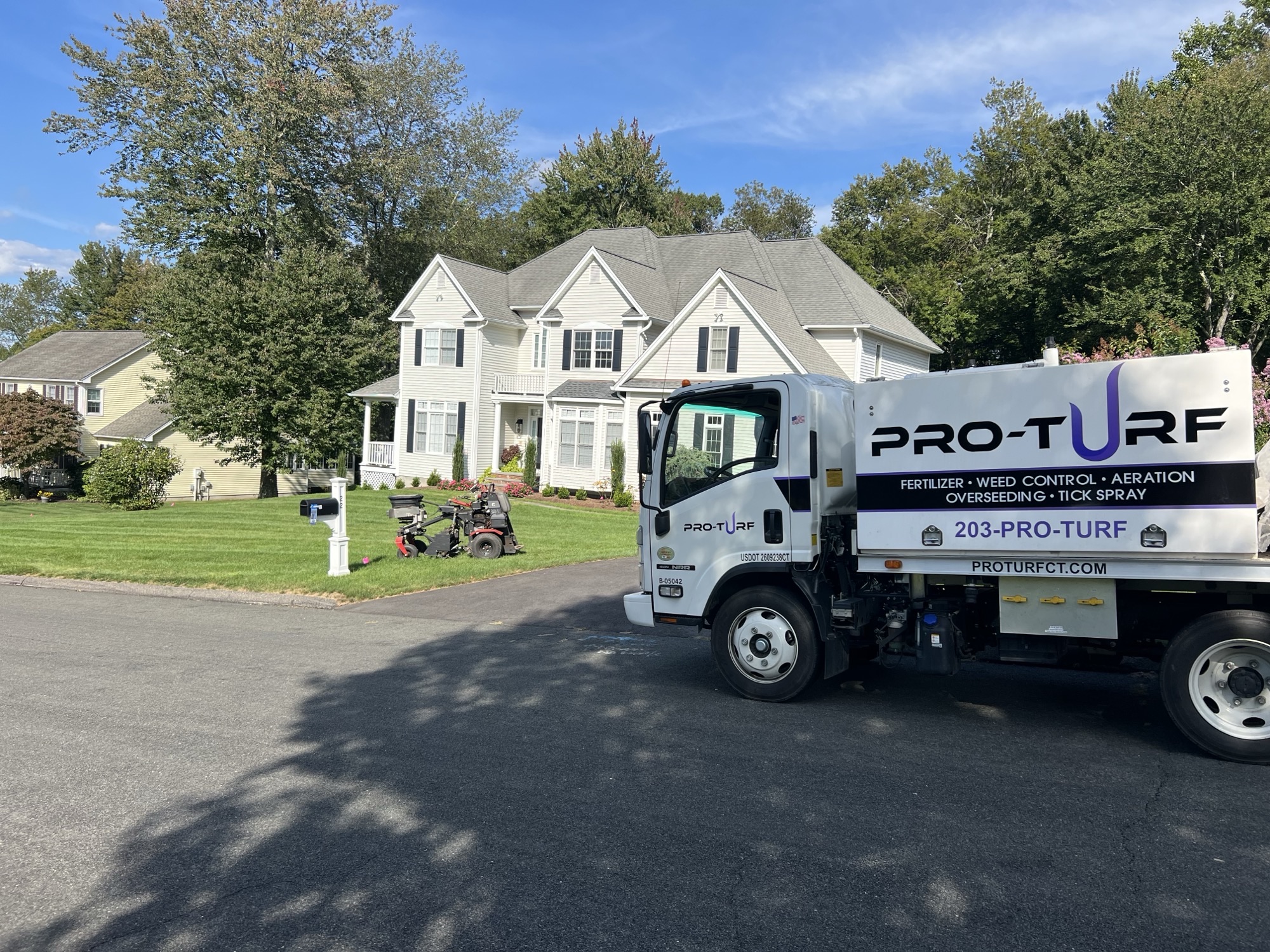
Aeration and overseeding, explained

Question the articles don't cover?

Talk to our team

Lawn feeling thin or hard underfoot?

Fall aeration and overseeding is the reset. Tell us about your property and we'll build the plan for it.