Lawn Health
Best Grass Seed for Connecticut Lawns: A Homeowner's Guide
The right grass seed makes or breaks an overseeding job. Here's what actually grows well in Connecticut — fescue, bluegrass, rye — and how to match seed to your yard.
The right grass seed makes or breaks an overseeding job. Here's what actually grows well in Connecticut — fescue, bluegrass, rye — and how to match seed to your yard.
Walk into any store in the fall and you will find a wall of grass seed bags, most of them promising a perfect lawn. The truth is that the right seed for a Connecticut lawn depends entirely on your property — how much sun it gets, how much traffic it takes, and what you are trying to fix. Connecticut sits firmly in the cool-season grass zone, which narrows the field to a handful of grasses that actually thrive here. Understanding them is how you avoid wasting a fall overseeding on the wrong seed.
Our climate — cold winters, warm-but-not-brutal summers — suits cool-season grasses, which grow most vigorously in spring and fall. Warm-season grasses common in the South simply do not hold up through a Connecticut winter. Nearly every quality lawn here is built from three cool-season species, usually blended together, each bringing something different.
Turf-type tall fescue is the backbone of many modern Connecticut lawns. It is not the coarse, clumping fescue that shows up as a weed in fine lawns — turf-type tall fescue is a refined, fine-bladed grass bred for lawns. Its deep roots make it the most drought- and heat-tolerant of the three, so it holds green through a dry July better than anything else, and it handles some shade.
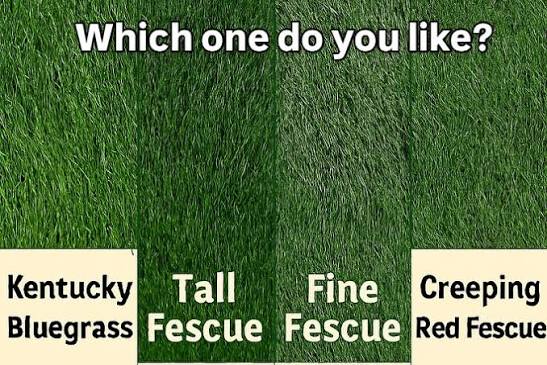
Kentucky bluegrass is the classic lush, dark-green lawn grass. Its standout trait is that it spreads by underground rhizomes, so it self-repairs — filling in bare spots and thin areas on its own over time. It loves full sun, needs more water than fescue, and is slower to germinate, which is why it is usually blended with faster grasses rather than used alone.
Perennial ryegrass germinates fast — often in under a week — which makes it valuable in an overseeding blend as the quick-establishing component that holds soil while the slower grasses come in. It is durable and takes traffic well, though it does not spread the way bluegrass does.
The Connecticut shortlist: turf-type tall fescue for drought tolerance and some shade; Kentucky bluegrass for a lush, self-repairing sunny lawn; perennial ryegrass for fast germination and durability. Most good lawns here use a blend of these matched to the site.
The best choice comes down to conditions. For a sunny, higher-traffic lawn, a fescue-dominant blend with some bluegrass and rye handles heat and wear. For a lush showcase lawn in full sun with irrigation, more Kentucky bluegrass delivers that dense, dark carpet. For shadier yards, fine fescues and shade-tolerant turf-type tall fescue blends outperform bluegrass, which struggles without sun. Getting this match right is exactly what separates a thriving overseeding from a disappointing one.
A quality seed blend is worth the difference in price. Bargain seed often contains coarse species, filler, or even weed seed, and a cheap bag can introduce the very coarse, clumping grasses you are trying to keep out of a fine lawn. Certified, named-variety seed with low weed content and improved disease resistance establishes better and looks better for years. When you are overseeding — as covered in our fall overseeding guide — the seed is the foundation, and it is not the place to cut corners.
The right seed, matched to your property and put down in the fall window, is what turns overseeding into a lasting result. Pro Turf Lawn Care selects and applies seed blends matched to each lawn across Fairfield, Litchfield, and New Haven counties. Request your online quote here.
Our licensed team will identify it and build the right plan for your property across Fairfield, Litchfield & New Haven counties.
See our aeration & overseeding serviceRequest your quote →