Lawn Health
Lawn Aeration in Connecticut: Why, When & How It Works
Core aeration is the single most effective thing you can do for a compacted Connecticut lawn. Here's why it works, when to do it, and what results to expect.
Core aeration is the single most effective thing you can do for a compacted Connecticut lawn. Here's why it works, when to do it, and what results to expect.
If there is one lawn service that quietly does more good than any other on a Connecticut property, it is core aeration. It is not flashy, but few things fix as many underlying problems at once. Compacted soil, thinning turf, thatch buildup, water runoff, weak roots — aeration addresses the root cause behind all of them. Understanding why it works makes it obvious why it belongs on nearly every lawn calendar in Fairfield, Litchfield, and New Haven counties.
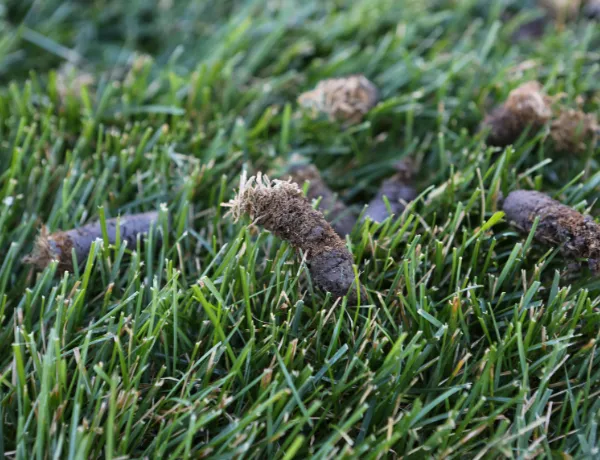
Core aeration opens up compacted soil across the entire lawn, creating channels roughly two to three inches deep. A core aerator does the work, and depending on the machine and the lawn, it may leave soil plugs on the surface that break down naturally over the following week or two. The result is a lawn that can suddenly breathe, drink, and feed itself in a way a compacted lawn simply cannot.
The key word is core. Core aeration opens the root zone properly, using professional equipment built for the job. What does not work is spike aeration — pressing a solid spike into the ground with a shoe or a rolling tool compresses the soil around each hole and can leave compaction worse than it started. Pro Turf uses professional core aeration equipment matched to the lawn in front of us.
Soil compaction is the silent problem behind most struggling lawns here. Over time, foot traffic, mowing, rain, and gravity press soil particles together until roots can no longer push through and water can no longer soak in. Connecticut's heavy clay-based soils compact faster and harder than sandy soils, which is why so many lawns in our area hit a plateau no amount of fertilizer or water seems to fix.
When soil is compacted, three things happen: water runs off instead of soaking in, air and nutrients cannot reach the root zone, and roots stay shallow and weak. A shallow-rooted lawn is the lawn that browns first in a July drought and thins first under stress. Aeration breaks that cycle by opening physical channels for air, water, and nutrients to reach the roots.
The benefits compound. Relieving compaction lets roots grow deeper, which builds drought resistance. The open channels let water and fertilizer reach the root zone instead of running off. Aeration also breaks up thatch — the layer of dead material between grass and soil — by introducing soil microbes that decompose it. And critically, opened soil creates the ideal seedbed, which is exactly why aeration and overseeding are done together.
What good aeration delivers: deeper, stronger roots; better water and nutrient absorption; reduced thatch; improved drainage in compacted spots; and an ideal environment for new seed to take hold. It is the reset button for a tired lawn.
For our cool-season lawns, fall is the ideal time — roughly late August through October. The soil is still warm enough for fast root recovery, cool-season grasses are entering their strongest growth period, and it lines up perfectly with fall overseeding. Aerating in fall means the lawn heals quickly and heads into winter stronger. Spring is a possible second option, but fall is the clear winner here because it pairs with seeding and avoids stirring up summer weed seeds.
Aeration on its own helps an established lawn. But its real power shows when it is paired with overseeding. Freshly opened soil gives new grass seed direct contact with the ground — the single most important factor in whether seed germinates. Seed dropped on a compacted, un-aerated lawn mostly sits on the surface and fails. Seed dropped onto freshly aerated soil finds moisture, contact, and protection. That is why Pro Turf almost always recommends the two together in fall, and why we cover the pairing in detail in our aeration and overseeding guide.
Depending on the method your lawn calls for, you may see soil plugs dotted across the surface afterward — leave them where they fall. They break down and return nutrients to the soil within one to two weeks. Water thoroughly, and if you overseeded, keep the surface consistently moist. Within a few weeks you will see thicker growth, and the deeper benefits to root health build over the following months.
A tired, compacted, or thinning lawn is usually not a fertilizer problem — it is a soil problem, and aeration is the fix. Pro Turf Lawn Care aerates lawns across Fairfield, Litchfield, and New Haven counties every fall, and pairs it with the right seed for your yard. Request your online quote here.
Our licensed team will identify it and build the right plan for your property across Fairfield, Litchfield & New Haven counties.
See our aeration & overseeding serviceRequest your quote →