Lawn Health
Lawn Soil pH: Why It Matters, How to Test It, and When to Lime
Most Connecticut lawns sit too acidic for good grass. How lawn soil pH affects fertilizer, how to test it properly, and when lime actually helps.
Most Connecticut lawns sit too acidic for good grass. How lawn soil pH affects fertilizer, how to test it properly, and when lime actually helps.
You feed the lawn on schedule. You water it right. And it still looks pale, thin, and tired next to the neighbor's, with moss creeping in under the trees and a stubborn patch of low, reddish weeds along the driveway. Nothing you put down seems to stick. On a lot of Connecticut lawns, the problem is not what you are applying. It is the soil the grass is sitting in, and specifically its pH.
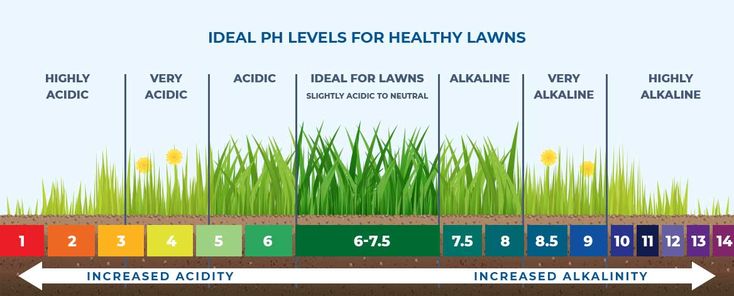
Soil pH is a measure of how acidic or alkaline the soil is, on a scale of 0 to 14. Seven is neutral. Cool-season grasses such as Kentucky bluegrass, perennial ryegrass, and the fine fescues do their best work between about 6.2 and 6.8. That range is where the nutrients grass needs most are easiest for roots to pull in, and where the soil biology that breaks down thatch and releases nitrogen is most active.
The scale is logarithmic, which matters more than it sounds. A pH of 5.5 is ten times more acidic than 6.5, not a little more. A lawn at 5.2 is a very different growing environment from one at 6.5, even though the numbers look close.
Most soil in Fairfield, Litchfield, and New Haven counties formed from granite and glacial till, which are acidic to begin with. On top of that, the region gets 45 to 50 inches of rain a year, and every inch of it leaches calcium and magnesium down out of the root zone. Decades of acid rain pushed things further. Fertilizer adds to it too: most nitrogen sources acidify the soil a little with every application.
The result is that an untested Connecticut lawn commonly comes back somewhere between 5.0 and 5.8. That is below the range where grass thrives and well inside the range where moss, sheep sorrel, and thin turf feel right at home. Lawns under oaks and pines, and lawns that have never been limed, tend to sit at the low end.
The damage is quiet. Nothing dies overnight. Instead, the lawn slowly underperforms everything you do for it.
How to spot it: Walk the lawn and look for moss in the shaded spots, sheep sorrel or broom moss in the thin areas, and a general pale, yellow-green color that does not improve after feeding. None of these prove low pH on their own, but together they are a strong hint. The only way to know is a proper test.
The probe meters sold at hardware stores are not reliable enough to base a lime decision on. Many read a full point off. The pH test strips are a little better but still rough. For a decision that shapes a whole season of feeding, send a sample to a lab.
The UConn Soil Nutrient Analysis Laboratory in Storrs runs a standard test for a modest fee and returns pH, buffer pH, and the major nutrients, along with a lime recommendation in pounds per 1,000 square feet. That last number is the one that matters. Buffer pH tells you how much lime it will actually take to move your particular soil, which a plain pH reading cannot.
To take a sample worth reading:
Lime is calcium carbonate, sometimes with magnesium carbonate added, and it raises pH by neutralizing acidity as it slowly dissolves. It is the right answer when a test shows pH below about 6.0. It is the wrong answer when nobody has tested.
Lime applied to a lawn that is already at 6.5 or higher pushes it toward alkaline, where iron and manganese lock up and the grass yellows for a different reason. Correcting that takes sulfur and a lot of patience. We see this on lawns that have been limed every fall for years out of habit. More is not better here.
Choose the type based on the test. If magnesium is low, use dolomitic lime, which supplies both calcium and magnesium. If magnesium is adequate, use calcitic lime so you do not push magnesium too high. Pelletized lime is far easier to spread evenly than pulverized, and the pellets break down with the first few waterings.
On rate, the lab number wins. If you are working from a general guideline instead, keep any single application to 50 pounds per 1,000 square feet on a typical Connecticut loam, and split larger corrections across two seasons. Heavy clay needs more lime to move the same amount; sandy soil needs less.
Lime is slow. It moves through soil at roughly an inch a year on its own, and it takes months to change the pH in the root zone. Put down in fall, it has the whole winter of freeze-thaw cycles and spring rain to work in before the grass wakes up. That timing also lines up with the two other things a Connecticut lawn should be getting in September and October.
Core aeration is the best thing that can happen to a lime application. The holes let the lime reach 2 to 3 inches down immediately instead of sitting on the surface for a year. Liming right after aeration and overseeding is the single most efficient way to correct pH we know of.
Lime also protects your fall fertilization. The heaviest, most important feeding of the year does far more good in soil where the roots can actually use it. If pH is the reason your lawn never responds to feeding, this is the fix.
One caution on timing: give lime and a fertilizer application a week or two apart rather than putting them down the same day. Lime in direct contact with fresh urea or ammonium fertilizer can drive off some of the nitrogen before it reaches the roots.
Correcting pH makes everything else work better, but it does not replace everything else. A lawn that is thin because of shade, compaction, grubs, or a poorly drained low spot will still be thin at pH 6.5. If you have corrected the soil and the lawn still has bare and brown areas, work through the common causes of bare spots before liming again. And weeds already established in the acidic years do not leave when the pH comes up. They need weed control on its own schedule; the pH correction just stops handing them the advantage.
We do not lime by the calendar. When we take on a lawn, we look at what it is telling us and pull a soil sample when the signs point to pH: moss, sorrel, a lawn that never responds to feeding, or new seed that never fills in. When the test calls for it, we apply lime in the fall, timed with core aeration and the fall feeding so it goes deep and gets to work over winter. Then we retest in two or three seasons rather than guessing, and we stop liming when the soil says stop.
If your lawn has been getting the right care and still looks like it is missing something, the soil may be the missing piece. Get a quote and we will start with what is actually in the ground.
Our licensed team will identify it and build the right plan for your property across Fairfield, Litchfield & New Haven counties.
See our fertilization programRequest your quote →