Pest
Sod Webworms: How to Spot the Damage and Control Them
Sod webworms chew ragged brown patches into sunny summer lawns. How to spot the dusk moths, confirm the caterpillars, and stop the damage on CT lawns.
Sod webworms chew ragged brown patches into sunny summer lawns. How to spot the dusk moths, confirm the caterpillars, and stop the damage on CT lawns.
You mow on a still evening and a little cloud of small tan moths flutters up out of the grass, flying in short zig-zags before dropping back down. A couple of weeks later, ragged brown patches start showing up in the sunniest part of the lawn - and they spread. That sequence is the signature of sod webworms, one of the quieter lawn pests we see on Connecticut lawns in the back half of summer. The moths you noticed are not the problem. Their offspring are. Here is how to tell sod webworms from the other things that brown a lawn in August, and what actually stops the damage.
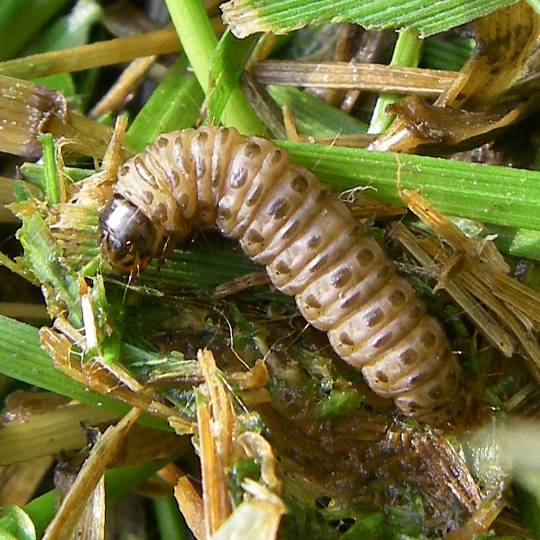
Sod webworms are the caterpillars of small lawn moths. The adult moths do not damage grass at all - they only lay eggs. It is the larvae that feed. A full-grown sod webworm is a slim, greenish-gray to tan caterpillar up to about three-quarters of an inch long, marked with dark spots. It spends the day hidden in a silk-lined tunnel down in the thatch and comes up at night to chew grass blades off near the base. Because they feed after dark and hide by day, most homeowners never see the caterpillar itself - they just see the damage and the moths.
Sod webworms run on heat. The moths are active through the warm nights of July and August, and there are usually two or more overlapping generations here, so feeding can continue in waves into early fall. They favor the same spots everything else avoids: sunny, dry, south-facing turf, slopes, and the strips along driveways and walks where the lawn already runs a little thin and stressed. A lush, well-watered lawn can take a surprising amount of webworm feeding and barely show it; a drought-stressed one shows every bite. New fall seedings are especially worth watching, because thin young turf has little to spare.
The damage starts as small, irregular brown patches with grass that looks chewed down and ragged rather than wilted. As feeding continues the patches widen and run together, and the lawn can look scalped in the worst areas. Two things point specifically to webworms rather than drought: the blades are notched and cut off near the crown, and you will often find tiny green fecal pellets down in the thatch. Birds working an area hard - pecking the turf repeatedly - are frequently after the caterpillars underneath.
It pays to rule out the other summer culprits, because the fix is different for each. Chinch bugs also brown out sunny edges, but you will find the bugs themselves at the soil line and the blades are not chewed. Grubs feed on roots, so grub-damaged turf lifts away like loose carpet - webworm turf stays firmly rooted. If you are not sure which you are dealing with, our guide to bare and brown spots walks through all the common causes side by side.
How to spot it: Two quick checks confirm sod webworms. First, walk the lawn at dusk and watch for small buff-colored moths flushing up and flying in a jerky, zig-zag path before dropping back into the grass. Second, do a soap flush on a patch that is still green at the edge: mix a couple of tablespoons of dish soap into a gallon of water, drench a square-yard section, and watch for a few minutes. The irritant drives the caterpillars up to the surface, where you will see them wriggling out of the thatch.
Start with the lawn itself. A dense, properly watered lawn tolerates light webworm feeding and grows back through it, so keeping turf healthy through the summer is the first line of defense - though in a hot, dry August even a good lawn can get hit, so it is not a guarantee. Where an active population is doing real damage, a targeted insecticide aimed at the young larvae is what turns it around. Timing matters more than product: the treatment works best on small, actively feeding caterpillars, and watering lightly before and after an application (follow the label) brings them up and improves contact. Once webworms have matured or a generation has finished feeding, spraying accomplishes little - at that point the better move is to water and overseed the thinned areas so the lawn fills back in.
Skip the folklore. There is no repellent or home remedy that reliably clears sod webworms, and treating the whole lawn on a calendar when there is no active feeding just spends money. This is a pest you treat when you have confirmed it and it is doing damage, not on a hunch.
Sod webworms respond well to being caught early, which is really a scouting problem more than a spraying one. Pro Turf watches the vulnerable, sun-baked parts of your lawn through the summer and applies a targeted insect control at the first sign of active feeding, before a small ragged patch becomes a re-seeding project - and we will tell you honestly when a lawn is healthy enough to grow through the damage on its own. Thin areas get overseeded in Connecticut's late-August to September window so the lawn closes back up before winter. Pro Turf Lawn Care serves homeowners across Fairfield, Litchfield, and New Haven counties. Request your online quote here.
Our licensed team will identify it and build the right plan for your property across Fairfield, Litchfield & New Haven counties.
See our fertilization & grub control programRequest your quote →