Pest
Grubs in Connecticut Lawns: Prevention & Curative Grub Control
Grubs quietly eat lawn roots until patches peel up like carpet. Here's how grub control works in Connecticut — and why timing is everything.
Grubs quietly eat lawn roots until patches peel up like carpet. Here's how grub control works in Connecticut — and why timing is everything.
Few lawn problems do damage as fast, or as sneakily, as white grubs. By the time most Connecticut homeowners notice the brown patches, the roots underneath are already gone — and the turf lifts up like a loose carpet. The good news is that grub control is one of the most predictable problems to solve, because grubs follow a calendar. Understanding that calendar is the difference between preventing damage and scrambling to repair it.
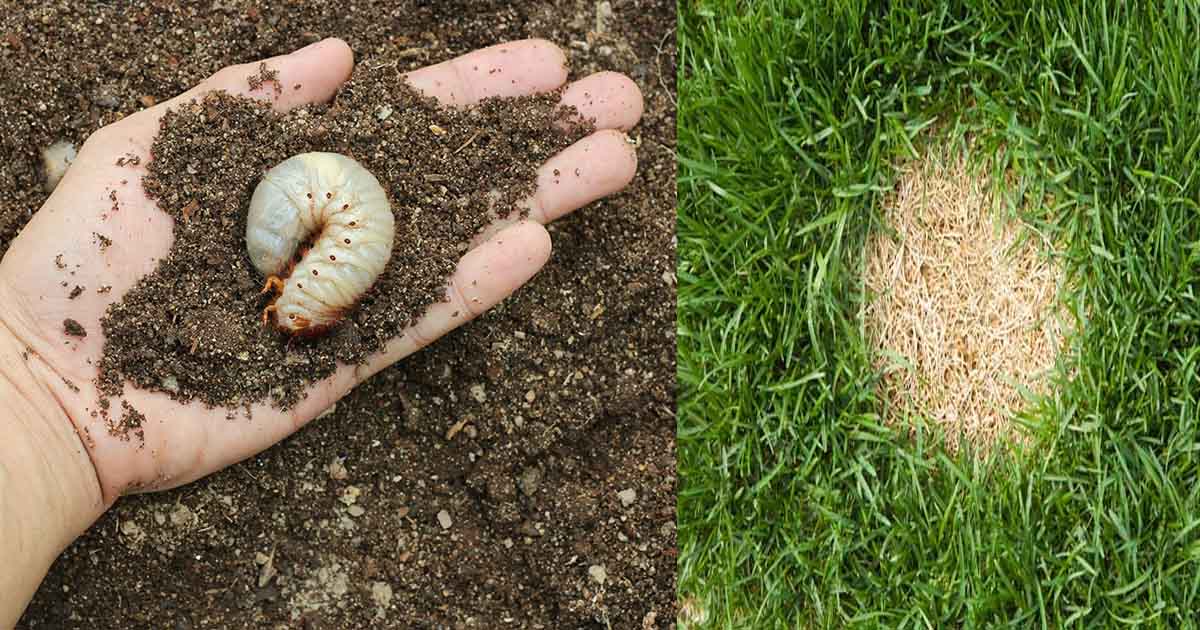
"Grubs" are the larvae of beetles — in our area, primarily Japanese beetles, along with European chafers and a few others. They're plump, white, C-shaped larvae with tan heads, ranging from a small fraction of an inch when they hatch up to about an inch when fully grown. They live in the soil just beneath the turf and feed on grass roots, which is exactly why their damage is so destructive: a lawn with its roots eaten away can't take up water or hold itself to the ground.
Grubs run on an annual cycle. The adult beetles emerge and lay their eggs in the lawn through early and mid-summer. Those eggs hatch into tiny grubs in mid to late summer, and the young grubs feed most aggressively on roots from late summer into fall — which is why damage shows up most in August and September. As the soil cools, they burrow down for winter, then return near the surface briefly in spring before maturing into the next generation of beetles.
That cycle is what makes timing everything. A preventive treatment works because it's in the soil before the eggs hatch, so the young grubs are controlled before they can do damage. A curative treatment, by contrast, targets grubs that are already actively feeding. Both have their place — but they're applied at very different times of the year, and using the wrong one at the wrong time is wasted effort.
Grub damage tends to appear as irregular brown patches in late summer and early fall that look, at first, like drought stress — but don't recover when you water. The most telling sign is texture: because the roots are severed, affected turf feels spongy underfoot and pulls up easily, rolling back like a rug. Many homeowners actually discover grubs indirectly, when skunks, raccoons, and birds start tearing up the lawn at night to feed on them. That secondary digging can do as much visible damage as the grubs themselves.
How to spot it: Cut three sides of a one-foot square at the edge of a damaged area and peel the turf back like a flap. Look in the top inch or two of soil for white, C-shaped larvae. A few grubs are normal in any lawn; it's when you find roughly ten or more per square foot — or the turf lifts with almost no root resistance — that you have a population worth treating.
For most Connecticut lawns, prevention is the smarter, more reliable route — especially for properties with a history of grubs or heavy beetle activity nearby. A preventive application made in early to mid-summer stops the next generation before it can damage the lawn. When grubs are already present and actively feeding in late summer, a curative treatment is used instead to stop the damage in progress, followed by overseeding to repair the thinned areas. The right choice depends on the season and what's happening in your specific yard.
Grubs are predictable, and that's exactly why they're so manageable with the right plan. Pro Turf builds grub control into the seasonal program at the point in the calendar where it actually works, and we watch for the beetle pressure and soil conditions that tell us a lawn is at risk. If you've had grubs before, seen animals digging in your yard, or noticed patches peeling up in late summer, it's worth getting ahead of it now rather than repairing it later. Pro Turf Lawn Care serves homeowners across Fairfield, Litchfield, and New Haven counties, and we'll match the timing and treatment to your lawn. Request your online quote here.
Our licensed team will identify it and build the right plan for your property across Fairfield, Litchfield & New Haven counties.
See our fertilization & grub control programRequest your quote →