Disease
Snow Mold Lawn Damage: Gray vs. Pink and What to Do
Gray or pink snow mold leaves matted, straw-colored patches after the thaw. Learn how to tell them apart, what to do in spring, and how to reduce the risk.
Gray or pink snow mold leaves matted, straw-colored patches after the thaw. Learn how to tell them apart, what to do in spring, and how to reduce the risk.
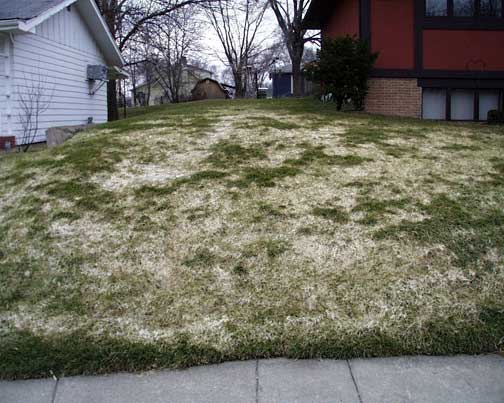
The snow melts, and instead of green-up you find matted, straw-colored patches in the lawn, some edged in gray, some with a pinkish cast. That is snow mold. It is one of the most common spring surprises on Connecticut lawns, and it is usually less serious than it looks.
Snow mold is a group of cold-weather turf fungi that grow under snow cover or in cold, damp, overcast weather just above freezing. The two you will meet here are gray snow mold (Typhula) and pink snow mold (Microdochium, also called Fusarium patch). They look different, and the difference matters for how fast the lawn recovers.
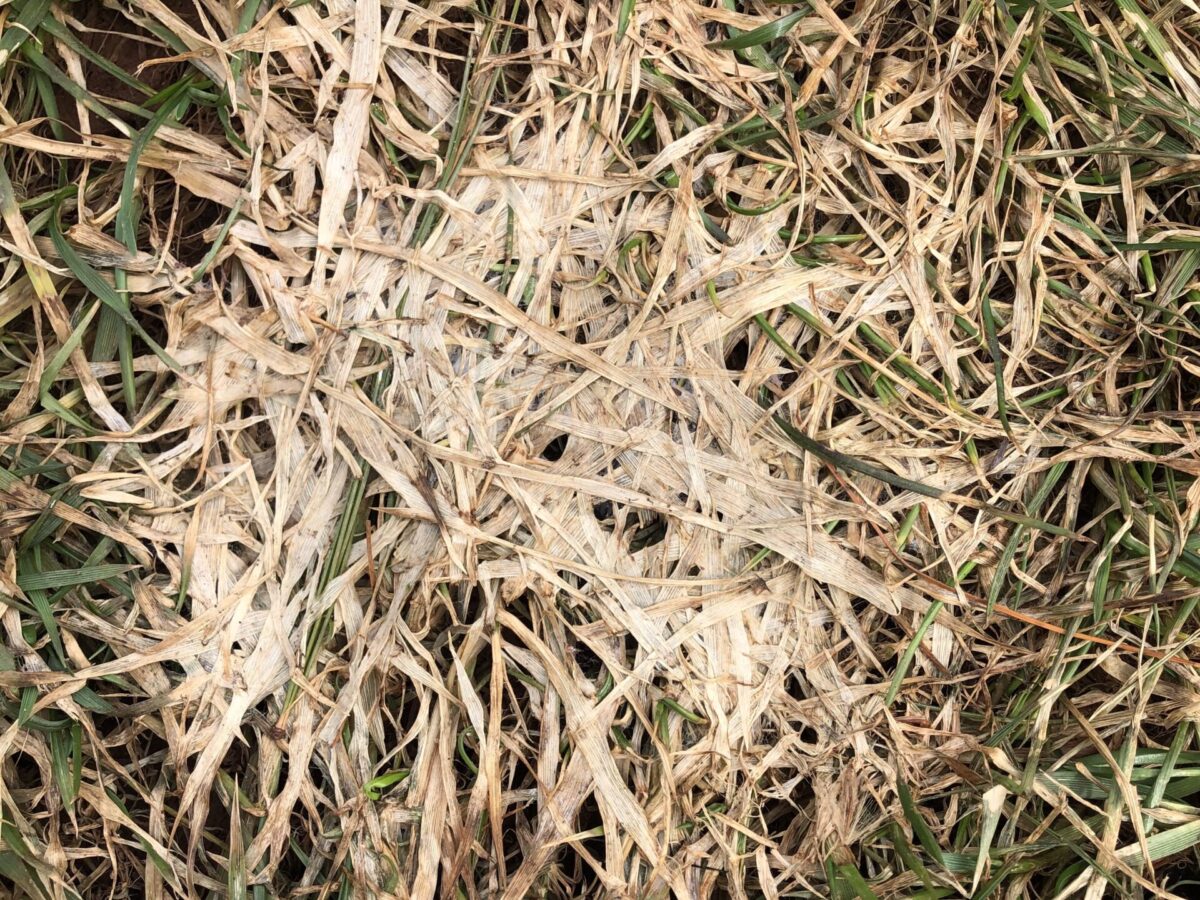
Gray snow mold needs a long stretch of snow cover on unfrozen ground. Once the snow melts you see circular, bleached or straw-colored patches from a few inches to a couple of feet across, with a gray-white, web-like crust of fungus on the blades. Tiny tan to dark-brown pellets (sclerotia) may be visible at the base of the grass. It mostly affects the leaf blades, so the crowns survive and the lawn typically grows back.
Pink snow mold does not need snow at all. It thrives in cool, wet, overcast weather from late fall through early spring. Patches are smaller, often 3 to 12 inches, tan to reddish-brown, and edged in pink or salmon when the turf is wet. Pink snow mold can attack the crowns and roots, so recovery is slower and bare spots are more likely.
How to spot it: Rake gently at the edge of a patch right after the snow melts. Gray snow mold lifts as a matted, web-like crust and may show tiny tan or dark pellets at the base of the blades. Pink snow mold leaves a slimy, pink-tinged edge when the grass is wet. If the crowns at the center of the patch are still firm and cream-colored, the lawn will usually recover.
Our winters give snow mold what it needs: snow that falls on ground that has not frozen hard, long stretches of cold wet weather, and a spring thaw that stays damp for days. Several lawn conditions make the damage worse:
Most snow mold needs patience rather than panic. Wait for the lawn to dry and the weather to warm. Then:
We will be honest about the limits. Where pink snow mold has killed the crowns, raking will not bring the grass back. Those spots need reseeding, and in a badly damaged lawn the weeds will get there first if the bare soil is left open. That is one reason weed control and feeding work together with disease management. See our weed control program for how we keep bare patches from filling with weeds.
You cannot make a lawn immune to snow mold, because weather drives it. You can reduce the risk with a few fall habits:
We look at the whole lawn, not just the patch: mowing height, leaf cover, thatch, drainage, soil and past disease history. In spring we help you tell recoverable gray snow mold from damage that needs reseeding, then restore bare areas with core aeration and overseeding. Learn more about our fungus and disease control service.
Want a professional eye on your lawn this spring? Get a Quote and we will take a look.
Our licensed team will identify it and build the right plan for your property across Fairfield, Litchfield & New Haven counties.
See our fungus and disease control serviceRequest your quote →