Disease
Slime Mold on Your Lawn: Harmless, but Alarming
Slime mold on a lawn looks like something spilled or burned the grass, but it is harmless. What it is, why it shows up after rain, and how to clear it.
Slime mold on a lawn looks like something spilled or burned the grass, but it is harmless. What it is, why it shows up after rain, and how to clear it.
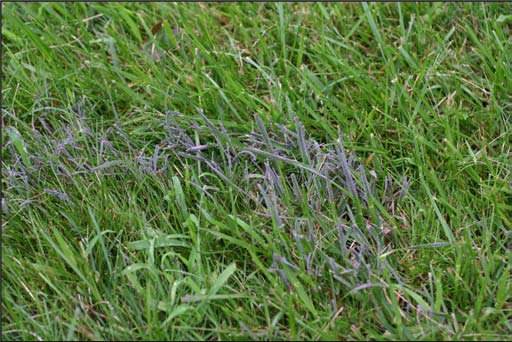
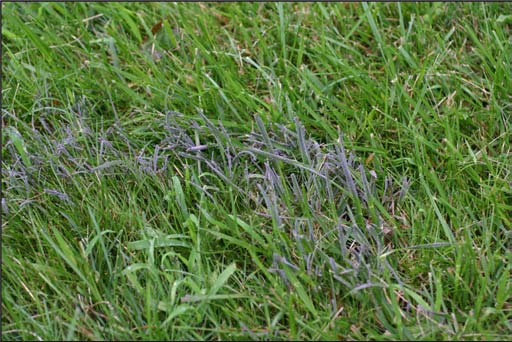
You come out one morning after a couple of days of rain and there is a patch of lawn that looks like someone dumped ash on it. Or spilled paint. Or, in the worst version, something bright yellow and foamy that looks like it belongs in a dog's stomach. It was not there yesterday. The grass under it seems fine, but the patch itself is impossible to ignore.
That is slime mold, and the first thing to know is that it is not hurting your lawn. It is one of the strangest things that can show up on a Connecticut lawn and one of the least dangerous. This article covers what it is, why it appears, and how to get rid of it without spending money on a treatment you do not need.
Despite the name, slime mold is not a mold and not a fungus. It is a primitive organism that lives in the soil and thatch, feeding on bacteria, decaying leaves, and other organic matter. Most of the year you never see it. When conditions turn warm and wet, it crawls up onto the grass blades to dry out and release spores. That crust you are looking at is the spore stage, and it uses your grass as a ladder, nothing more.
The organism does not feed on living grass. It does not enter the plant, and it does not spread disease. The only harm it can do is cosmetic: if a thick patch sits on the blades for more than a few days, it can shade them enough to cause a little yellowing, which grows out with the next mow.
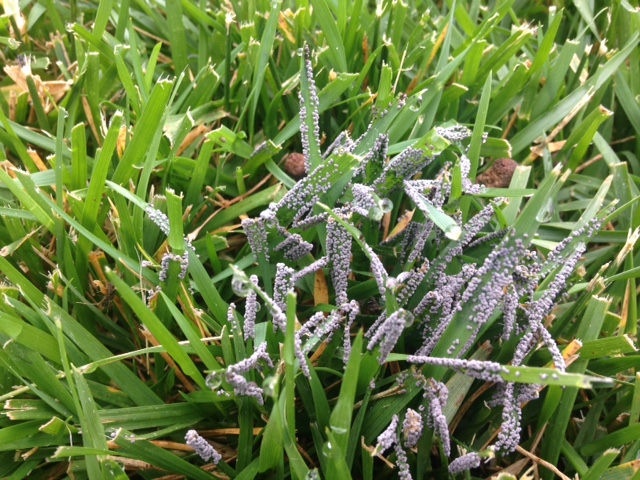
How to spot it: pick a coated blade and rub it between your thumb and finger. Slime mold comes off as a dry powder, like chalk dust or soot, and the blade under it is green and whole. A true disease like lawn rust or fairy ring leaves damaged, discolored, or dying tissue behind.
The most common form here is a gray to black crust made of thousands of tiny pinhead-sized balls, coating the blades across a patch anywhere from four inches to two feet wide. It can also be purple, brown, cream, or white. The one people call about most is the bright yellow, foamy form that spreads across mulch beds and lawn edges. It looks alarming and it is completely harmless.
Slime mold shows up suddenly, usually overnight, and it is almost always after weather: two or three days of warm rain, a stretch of muggy nights with heavy dew, or a spot that gets watered every evening. It tends to appear in the same place each year because the spores stay in the soil and thatch and wait for the next wet spell.
Connecticut summers hand slime mold everything it wants. Our humid stretches from June through September, the afternoon thunderstorms that leave the lawn soaked into the night, and the heavy, slow-draining soils across Fairfield, Litchfield, and New Haven counties all keep the surface damp long enough for it to move.
A few lawn conditions make it more likely. A thick thatch layer gives the organism more to feed on and holds moisture at the surface. Low spots and compacted areas that stay wet after rain are a favorite. Lawns watered every day, or watered in the evening, stay damp overnight and see it more often. Shaded areas along tree lines and beds dry slowly and show it more too.
None of that means your lawn is unhealthy. Slime mold turns up on well-kept lawns all the time. It is a sign that the surface stayed wet for a few days, and in a Connecticut summer that happens to everyone.
The honest answer is: not much. There is no product we would recommend for slime mold, and fungicides do nothing useful against it because it is not a fungus. It will disappear on its own within a week or so once the weather dries out.
If you want it gone sooner, break it up. Mow the patch, rake it lightly, sweep it with a stiff broom, or knock it off the blades with a hard spray from the hose on a dry, sunny morning. Any of those will clear it. Spraying it with water while it is still wet and slimy can spread it across a wider area, so wait until it has dried to a crust before you hose it down. Bag the clippings from that mow if the patch was large.
Do not dig it out or replace the sod. The organism lives in the soil across the whole lawn; the patch is just where it happened to surface. Digging accomplishes nothing.
You cannot stop slime mold entirely, and any company that promises to is selling something. What you can do is make the lawn surface dry faster, which reduces the risk of it appearing and shortens how long it stays.
Water deeply and less often, early in the morning so the blades dry by mid-day. Skip the evening watering; a lawn that goes into the night wet is the single biggest invitation. If thatch is over half an inch thick, core aeration each fall breaks it down and improves drainage in the compacted areas where slime mold likes to settle. Mow at three to three and a half inches and keep the blade sharp so the turf stays dense and dries evenly. Clean up fallen leaves and grass clumps rather than letting them sit and rot on the surface.
A thick, healthy lawn also crowds out the weeds that move into any thin, damp spot. If the areas where slime mold appears are also where crabgrass, nutsedge, or broadleaf weeds keep showing up, that is the same underlying moisture problem, and our weed control program handles that side of it.
The one thing that matters is getting the diagnosis right, because a couple of real diseases can look similar from a distance. Orange or rust-colored powder that coats your shoes and mower is lawn rust, which is a fungus and does thin the turf over time. A dark green ring or arc with mushrooms is fairy ring. Greasy, matted, dark streaks that spread fast in extreme heat are pythium blight, which is a true emergency. If the coating does not rub off as a clean powder, or the grass under it is brown, wilted, or dying, it is not slime mold and it is worth a closer look.
When a customer calls about a strange patch, we come out and confirm what it is. Most of the time, with slime mold, the visit ends with reassurance and a recommendation to adjust the watering. We will not sell you a fungicide application for something that does not need one.
Where slime mold keeps returning to the same spots, that tells us the surface is staying wet, and we look at the causes: thatch depth, compaction, drainage, shade, and irrigation timing. Fall core aeration and a watering schedule that dries the lawn by mid-morning address most of it. And if the patch turns out to be something else, a real fungal disease, we catch it early and treat it as part of our fungus and disease control program.
Not sure what is on your lawn? Send us a photo or request a visit and we will tell you what you are looking at. Get a Quote.
Our licensed team will identify it and build the right plan for your property across Fairfield, Litchfield & New Haven counties.
See our fungus & disease control programRequest your quote →