Lawn Health
Grass Seed for Shade: Why Your Lawn Thins Under Trees
Grass thins under trees when light, water and air movement run short. Here is the seed that holds in shade, and when to plant a bed instead.
Grass thins under trees when light, water and air movement run short. Here is the seed that holds in shade, and when to plant a bed instead.
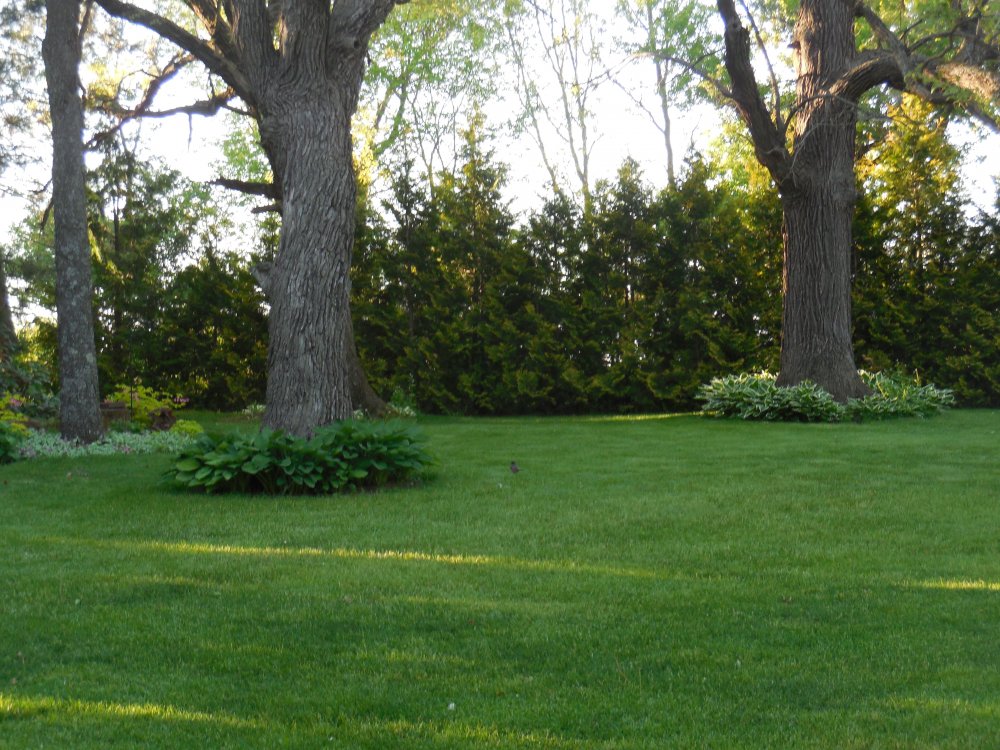
The open part of your lawn looks fine. Then you walk under the maple out front, or along the tree line at the back of the property, and the grass turns thin and stringy. Every year it gives up a little more ground, until there is more soil and moss showing than turf.
This is one of the most common things we look at in Newtown, Monroe, Southbury and Woodbury. Mature oaks and maples are why people move here, and they are also why the lawn underneath them struggles. The good news is that shade is usually fixable. The honest part is that it is not always, and it helps to know which one you are dealing with before you spend money on seed.
Shade gets blamed for all of it, but three things are working against the turf at once.
Light. Cool-season grasses need energy to replace the leaf tissue you remove every time you mow. Under a full canopy they cannot make enough, so they stretch, thin out, and stop filling in sideways.
Water and nutrients. A mature maple pulls hundreds of gallons a day out of the top foot of soil. Norway maples are the worst offenders here, because their feeder roots sit right where grass roots want to be. The turf loses that competition every time.
Air movement. Under a canopy the dew sits on the blades until mid-morning instead of burning off by eight. Long leaf wetness is what disease needs, which is why shaded turf is usually the first place we see leaf spot and red thread show up.
How to spot it: pick the worst patch and check it three times on a clear day, at 9am, noon and 3pm. Add up the direct sun. Four hours or more, or bright dappled light all day, and grass will hold with the right seed. Under about three hours, no seed on the market will fix it.
This is where most homeowners lose the money. A contractor mix or a bag of Kentucky bluegrass will germinate under a tree and look promising for six weeks, then thin out by the following July. Bluegrass wants six-plus hours of sun and will not hold in shade no matter how well it is watered.
The shade grasses for Connecticut are the fine fescues: creeping red, chewings and hard fescue. They are finer bladed, they tolerate lower light and lower fertility, and they handle dry root competition better than anything else that grows here. A good shade blend leans heavily on fine fescue with a small amount of perennial ryegrass for quick cover. We go through the whole seed question in more detail in our guide to the best grass seed for Connecticut lawns.
Seed alone rarely does it. Shaded turf needs different management than the open lawn.
Some spots will not hold turf, and we will tell you when we think you are in one. Deep shade under hemlocks or a tight stand of Norway maples, on compacted soil over ledge, is a place where you can reseed every fall forever and never get a stand that lasts. A mulch bed out to the drip line, or a shade-tolerant groundcover, looks better and costs less over time than seed you replace every year.
We walk the property and read the light before we recommend anything, because the answer changes from one side of the house to the other. Where shade areas can carry turf, we core aerate and overseed with a fine fescue blend in the late-August to mid-September window, which is when Connecticut soil temperatures give seed its best shot. Read more about the timing in our fall overseeding guide.
From there the shade areas go on a lighter feeding schedule than the open lawn, and broadleaf weed control is part of every program we run, since thin turf is exactly where weeds move in. If you are not certain shade is the cause at all, our article on bare and brown spots in Connecticut lawns walks through the other eight reasons a patch goes thin.
If the grass under your trees has been getting worse every year, we can take a look and tell you honestly what it will hold. Request a quote and we will come out and read the property.
Our licensed team will identify it and build the right plan for your property across Fairfield, Litchfield & New Haven counties.
See our aeration & overseeding serviceRequest your quote →