Weed
Poa Trivialis: The Perennial Imposter
Glossy, light-green patches that collapse in July are usually poa trivialis. How to tell it apart from other grasses, and what actually removes it.
Glossy, light-green patches that collapse in July are usually poa trivialis. How to tell it apart from other grasses, and what actually removes it.
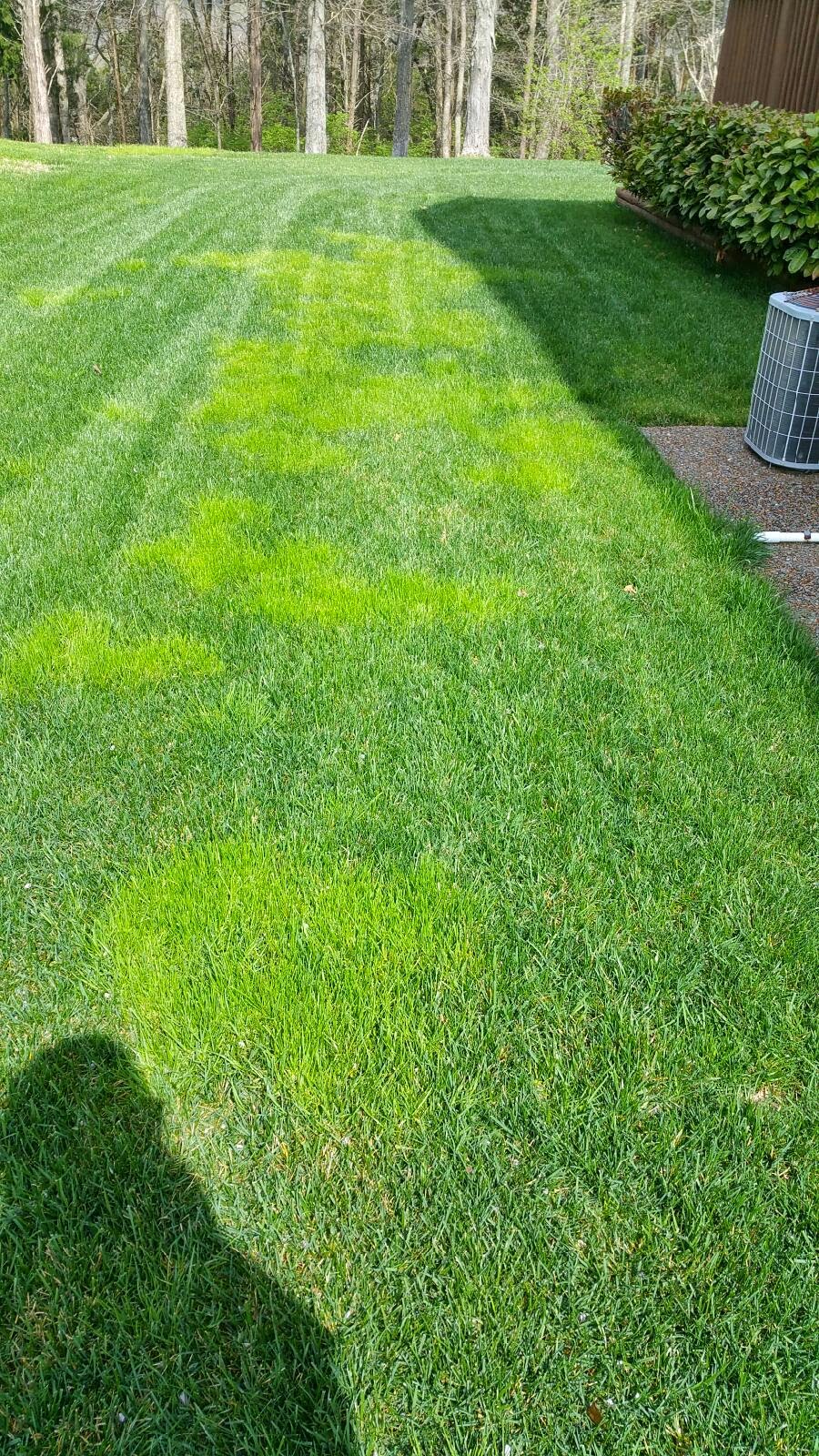
Mid-July, and one part of the lawn has gone the color of straw. The rest is still green. It is not a ring and not a circle — just an irregular light patch, or several, usually in shade or wherever the ground stays damp. You water it and nothing changes. Then the nights cool off, the rain comes back, and it greens up again on its own.
That pattern — thrives in spring, collapses in heat, returns in fall, in the same place every year — is the signature of poa trivialis. It is a real grass, which is why it is so easy to miss. It is just not the grass you want.
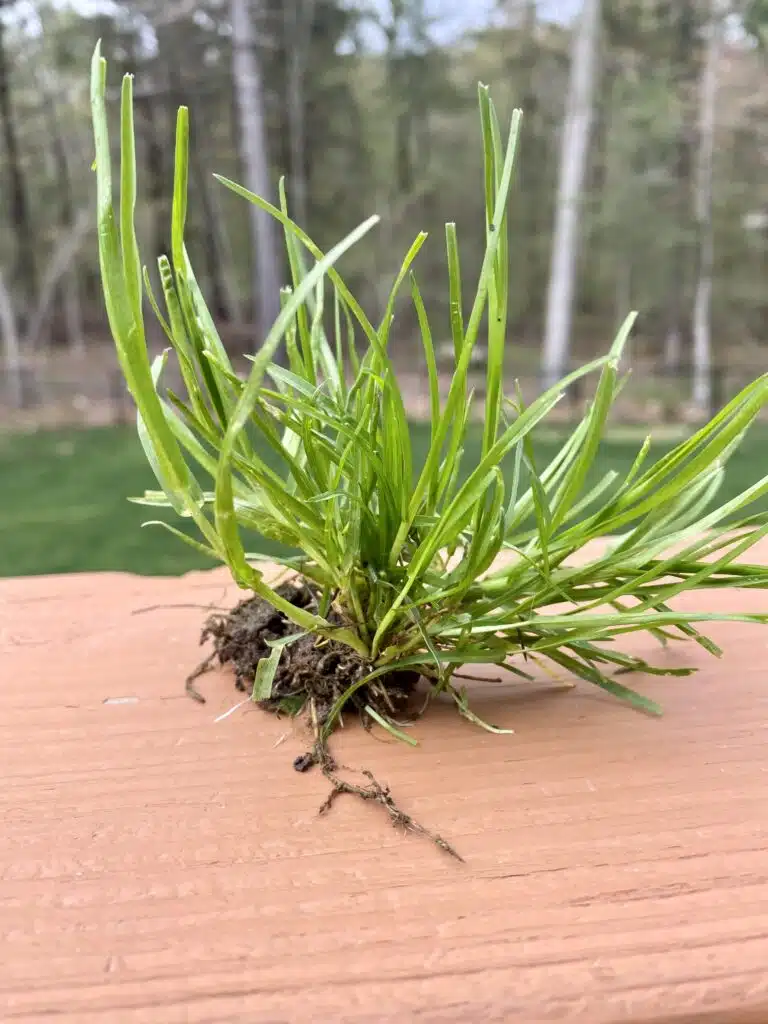
Poa trivialis, also called rough bluegrass, is a cool-season perennial that spreads by stolons — runners that creep across the soil surface rather than down into it. That one detail explains most of its behavior. Kentucky bluegrass and fine fescue root deep. Poa trivialis builds a shallow mat. In spring it looks terrific: bright, dense, aggressive. In a Connecticut July, with the top inch of soil hot and dry, it has nothing to fall back on and shuts down.
Most lawns did not grow it on purpose. It arrives two ways — as a contaminant in bargain seed mixes, where small percentages can sit on the label under "other crop seed," and in sod. A lawn sodded fifteen years ago can still be carrying it, quietly widening a foot a year.
How to spot it: kneel down and take hold of the edge of the patch. Poa trivialis lifts as a mat — a tangle of runners rooted only in the top inch, peeling up like a rug. Then look at a single blade where it meets the stem. Poa trivialis has a long, pointed, papery ligule you can see with the naked eye. Kentucky bluegrass has almost none. If the mat peels and the ligule is long, you have your answer.
The other tell is shine. Poa trivialis blades are glossy underneath and catch low sunlight in a way the surrounding turf does not. Walk the lawn early or late in the day and the patches almost glow.
Three lookalikes worth ruling out:
Our corner of Connecticut suits it almost perfectly. Lawns in Fairfield, Litchfield and New Haven counties tend to be tree-lined, and the glacial soils underneath hold moisture well. Shade, damp ground and long cool springs are exactly the conditions in which poa trivialis outcompetes better turf. Add an irrigation system running the shaded zones on the same schedule as the sunny ones, and you are effectively feeding it.
It will keep widening. It does not respond to fertilizer by becoming better grass — it responds by spreading faster.
Here is the honest part. There is no selective herbicide that takes poa trivialis out of a cool-season lawn and leaves the good grass standing. Anything strong enough to kill it kills Kentucky bluegrass and fescue alongside it. A product that promises otherwise is not doing what it says.
So removal is a renovation, not a spray:
Timing carries this. Seed down in early September has roughly ten weeks of root growth ahead of it; the same seed in late October does not. Our guide to when to aerate and overseed covers the Connecticut window in detail.
Then be careful what you put back. Reseeding with a bargain mix is how the problem arrived in the first place. Read the label, look at the "other crop seed" line, and pick a mix matched to the site — which is what our guide to choosing grass seed for Connecticut lawns is for.
If poa trivialis covers more than roughly a third of the lawn, spot renovation will not hold. You end up treating a patchwork every year while the untreated areas reinvade it. At that point the real choice is a full renovation of the whole area, or accepting a lawn that looks good for nine months and rough for three. Both are reasonable. Spending money on repeated spot work that cannot win is not.
The same goes for deep shade under mature trees. If the site will not support decent turf in the first place, poa trivialis is a symptom rather than the problem.
We identify it in person — the mat test and the ligule, not a guess from a photo — and mark the affected areas while they can still be told apart from everything else. From there we plan the work around the September seeding window: non-selective treatment on the marked patches, a follow-up pass, then core aeration and overseeding so the repair goes in at the right depth with the right seed.
Broadleaf weeds move quickly into any thin ground a renovation opens up, so our weed control program runs alongside the repair through fall rather than after it.
If you have a patch that turns straw-colored every July and greens back up each September, it is worth a look before this year's seeding window closes. Get a quote and we will tell you what you actually have.
Our licensed team will identify it and build the right plan for your property across Fairfield, Litchfield & New Haven counties.
See our aeration & overseeding programRequest your quote →