Weed
Nutsedge (Yellow & Purple) in Connecticut Lawns: ID & Control
That fast-growing, spiky weed poking above your lawn is likely nutsedge. Here's how to identify yellow and purple nutsedge — and why control in Connecticut takes patience.
That fast-growing, spiky weed poking above your lawn is likely nutsedge. Here's how to identify yellow and purple nutsedge — and why control in Connecticut takes patience.
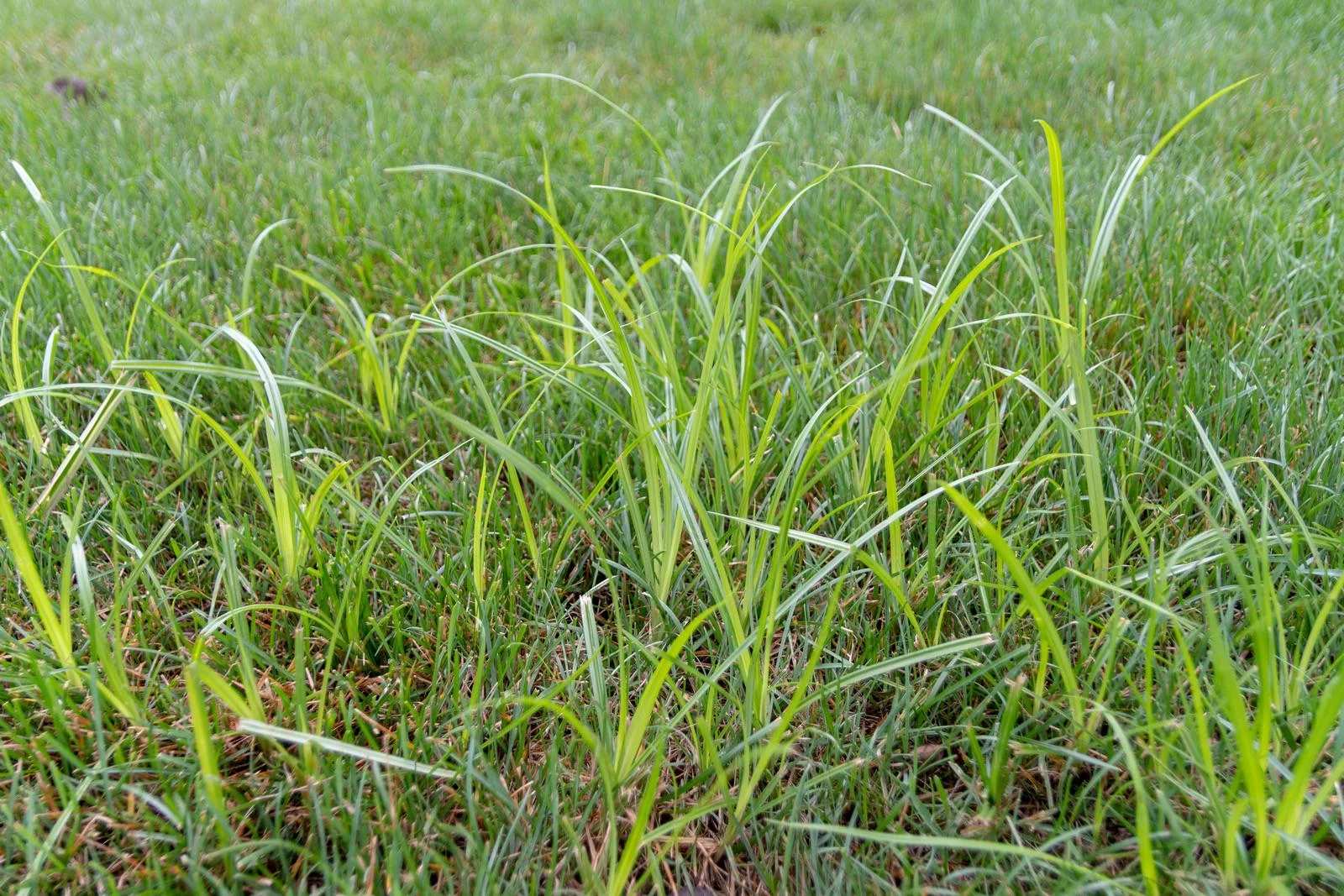
If a stiff, spiky, yellow-green weed keeps shooting up above your lawn just days after you mow, you're almost certainly dealing with nutsedge — one of the most persistent warm-season weeds we treat on Connecticut lawns. It isn't a grass at all, and that's exactly why the products most homeowners reach for don't touch it. Getting nutsedge control right starts with recognizing what it actually is.
Nutsedge looks grass-like from a distance, but it belongs to a separate family of plants called sedges — and that distinction matters, because a standard broadleaf weed killer or grass treatment won't control it. The old saying is the easiest way to remember it: "sedges have edges." Roll a nutsedge stem between your fingers and you'll feel three distinct sides — a triangular stem, where a true grass stem is round and hollow. The leaves are thicker, stiffer, and waxier than lawn grass, arranged in sets of three from the base, and a noticeably lighter, more yellow-green color that stands out against healthy turf.
Nutsedge thrives in the heat of summer, from June through August, and it grows fast — faster than the surrounding lawn, which is why you'll see it spiking above an otherwise even yard within a couple of days of mowing. It strongly favors wet, poorly drained, or low-lying areas, so a patch of nutsedge is often a clue that part of your lawn is holding too much water. Its real staying power, though, is underground: nutsedge spreads through a network of roots and small tubers called nutlets. Pull the plant by hand and the stem snaps off while the nutlets stay behind, each one ready to send up a fresh shoot. That's why hand-pulling almost always makes a nutsedge problem worse, not better.
Two types show up in our area, and they're worth telling apart because they behave a little differently. Yellow nutsedge is the more common of the two here.
How to spot yellow nutsedge: Light yellow-green, glossy leaves that taper to a fine, sharp point; straw-colored to golden seed heads; leaf tips feel soft. Favors the wet, sunny low spots of the lawn and is the type most Connecticut homeowners encounter.
How to spot purple nutsedge: Darker green leaves with an abruptly rounded, less tapered tip; reddish to purple-brown seed heads; tends to form chains of tubers underground, making it even more stubborn. Less common in CT but worth identifying correctly.
Because nutsedge regrows from its underground tubers, the only lasting control is a treatment that moves down into that system rather than just burning off the top growth. Pro Turf uses targeted, selective sedge treatments applied during active summer growth, timed to draw the product into the nutlets and weaken the plant's ability to resprout — which is why nutsedge control is a process rather than a one-time fix. Just as important is correcting the conditions that invited it in: improving drainage, easing compaction, and thickening the turf so it holds less water and gives nutsedge fewer openings. If spiky, fast-growing patches keep returning to your lawn every summer, that's your cue to treat it properly. Pro Turf Lawn Care serves homeowners across Fairfield, Litchfield, and New Haven counties, and we'll identify what you have and build the right plan to push it back. Request your online quote here.
Our licensed team will identify it and build the right plan for your property across Fairfield, Litchfield & New Haven counties.
See our weed control programRequest your quote →